What Is Gas Cylinder Tracking? A Complete 2026 Guide
Gas cylinder tracking is the discipline of giving every cylinder in a fleet a unique digital identity and recording each movement, fill, test and status change across its entire working life. Instead of relying on paper registers, gate books and institutional memory, an operator running gas cylinder tracking knows — at any moment — exactly where a cylinder is, who is holding it, what gas it last carried, when it was last tested, and whether it is safe to fill again. For an industry that still runs largely on manual challans and Excel sheets, this shift from "we think" to "we know" is the single biggest operational upgrade a gas company can make.
To understand why this matters, it helps to first look at how cylinders actually move through a typical industrial or medical gas business, and then walk through what a proper tracking system does differently at each of those steps.
The problem cylinder tracking was built to solve
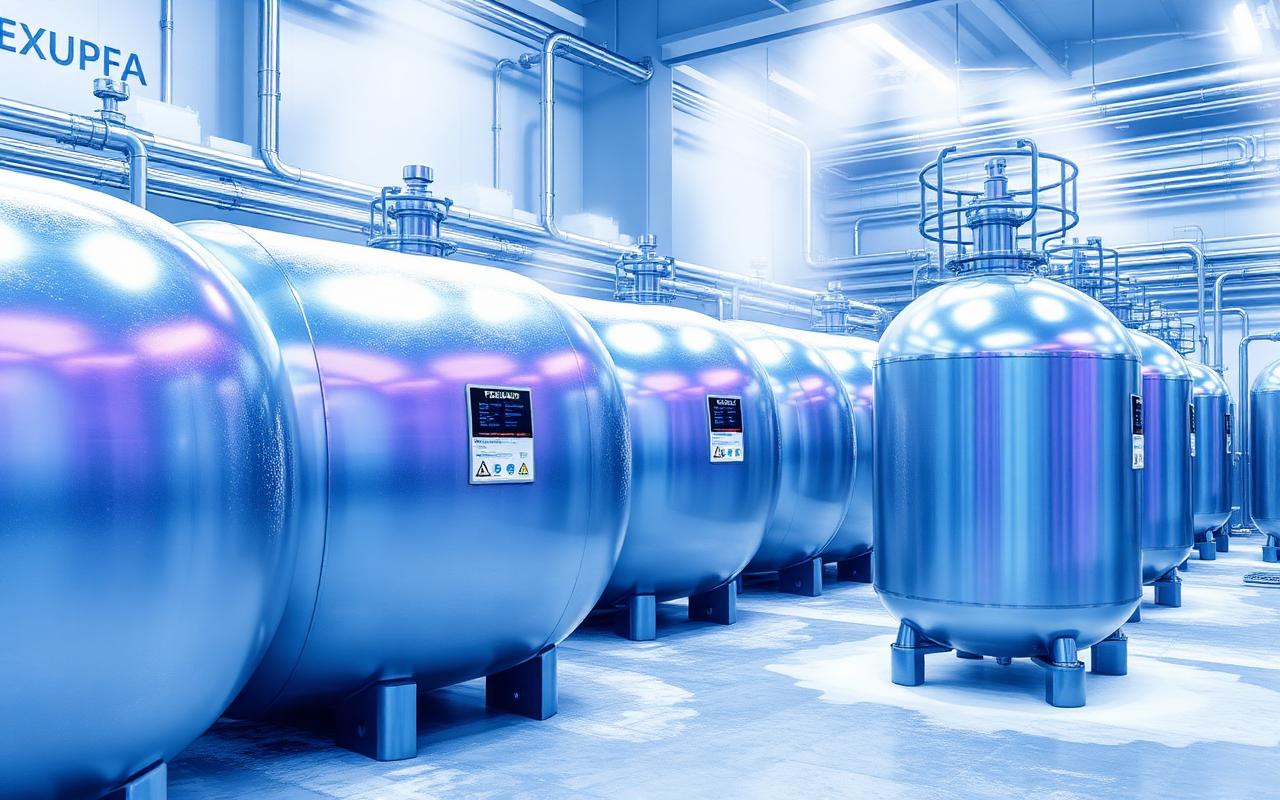
A cylinder is not a simple consumable. It is a serialised, reusable, safety-critical pressure vessel that can remain in circulation for 20-40 years, changing hands dozens of times a year between filling plants, distributors, transport fleets, dealers, industrial customers, hospitals and workshops. A mid-sized gas company might own anywhere from 10,000 to 200,000 cylinders, and each one represents real capital — often ₹3,000 to ₹25,000 or more depending on gas type and material.
When that scale of asset movement is recorded on paper, three things happen predictably:
- Cylinders get "lost" simply because no one wrote down where they went.
- Deposits and rental charges drift out of sync with what customers actually hold.
- Statutory test dates are missed because no one is watching 50,000 individual due dates.
None of this is due to negligence. It is a volume problem. Human beings and paper registers are simply not built to track tens of thousands of individually serialised, constantly moving assets with regulatory deadlines attached to each one. This is precisely the gap that gas cylinder tracking systems close, and it is why the category has grown from a niche IT project into a core operating requirement for any serious industrial or medical gas supplier.
Defining gas cylinder tracking properly
At its core, gas cylinder tracking means three things happening together, continuously:
- Unique identification — every physical cylinder is linked to one digital record for its entire life, not just for a single transaction.
- Event capture — every time the cylinder changes hands, location or state, that event is logged with a timestamp, a location and an operator.
- Centralised visibility — all of that data lives in one system that anyone authorised — from a plant supervisor to a finance controller to an auditor — can query in real time.
Without all three, you don't really have tracking — you have data collection. A spreadsheet that records fills at one plant is data collection. A system that follows the cylinder from manufacture through every fill, dispatch, delivery, return, test and eventual retirement, and lets you query "where is cylinder #KL-04821 right now and when is it next due for testing" in two seconds, is tracking.
The anatomy of a cylinder's life, and where tracking plugs in
Consider the lifecycle of a single industrial oxygen cylinder:
- It is manufactured and stamped with a serial number and manufacturing date.
- It enters a filling plant's stock and is registered in the operator's system.
- It is periodically filled, moved to a dispatch yard, loaded onto a truck, and delivered to a customer.
- The customer uses the gas, and at some point the empty cylinder is returned — or not.
- Every few years, depending on jurisdiction and gas type, it must undergo hydrostatic testing before it can be refilled again.
- Eventually it is condemned and scrapped when it fails a test or reaches end of life.
A gas cylinder tracking platform attaches a digital record to that serial number at the very first step and updates it at every subsequent step. That record becomes the cylinder's passport — anyone in the business, or the customer themselves through a customer portal, can see its full history on demand.
Why this matters commercially, not just operationally
It's tempting to think of tracking as a compliance or IT nicety. In practice, the financial case is usually what gets budget approved. Consider the departments that are directly affected:
- Finance can reconcile cylinder deposits, rental billing and demurrage charges automatically, because the system knows exactly how long each customer has held each cylinder.
- Operations gets a live, plant-by-plant, gas-by-gas inventory view instead of a monthly stock-take that is already stale by the time it's compiled.
- Safety and compliance teams stop discovering overdue test cylinders by accident, because the system proactively flags them before the deadline.
- Sales and customer service can answer "how many cylinders do we have with you" instantly instead of triggering a physical audit.
Industry benchmarking studies on unmanaged cylinder fleets consistently find that 5-15% of a fleet can be effectively "lost" in a given year — sitting forgotten at customer premises, misrecorded between plants, or simply unaccounted for. On a fleet of 50,000 cylinders at an average replacement value of ₹8,000, a 10% loss rate represents ₹4 crore of capital quietly evaporating annually.
How a modern tracking system actually works, step by step
Every credible cylinder tracking platform, regardless of vendor, follows roughly the same four-stage loop, even if the underlying hardware differs.
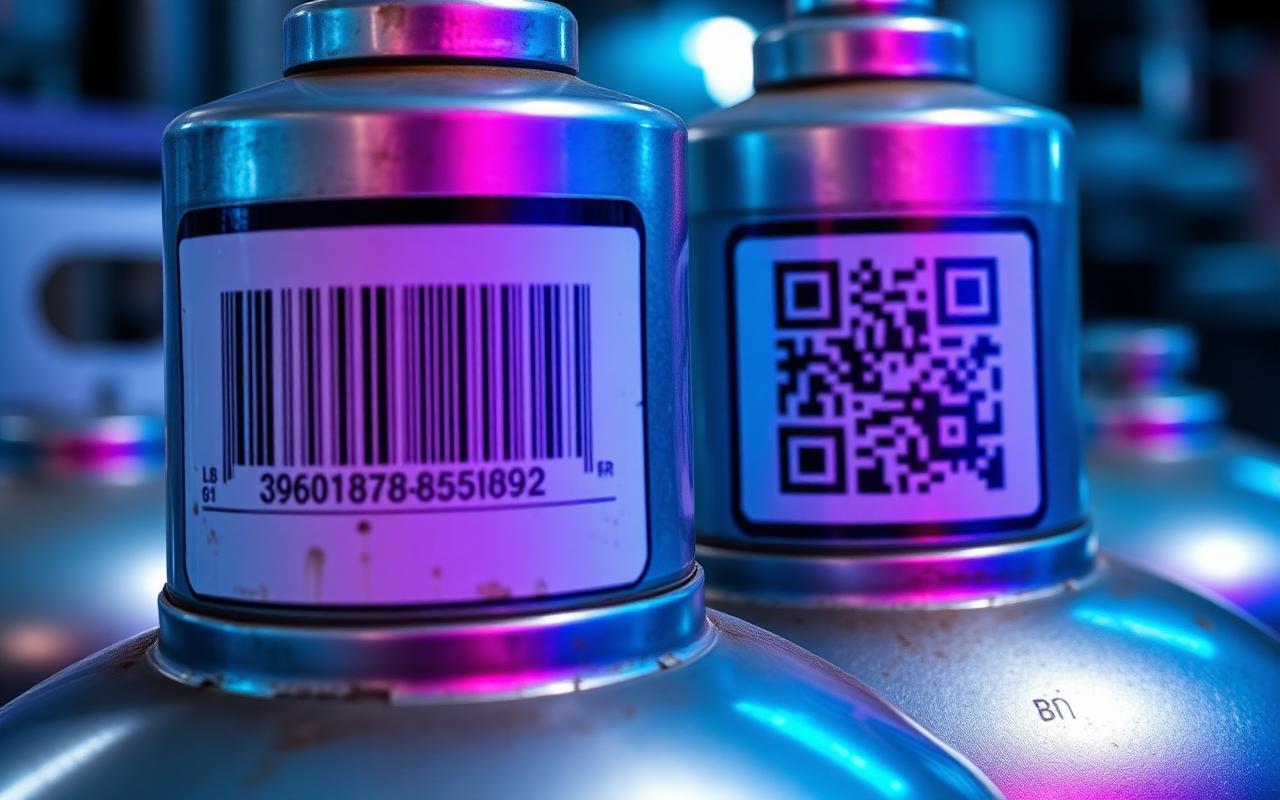
- Identify. Each cylinder is fitted with a barcode label, a QR code, or an RFID tag, and that tag is linked in the software to a master record containing the cylinder's specification, ownership, manufacture date, water capacity, working pressure, and full history.
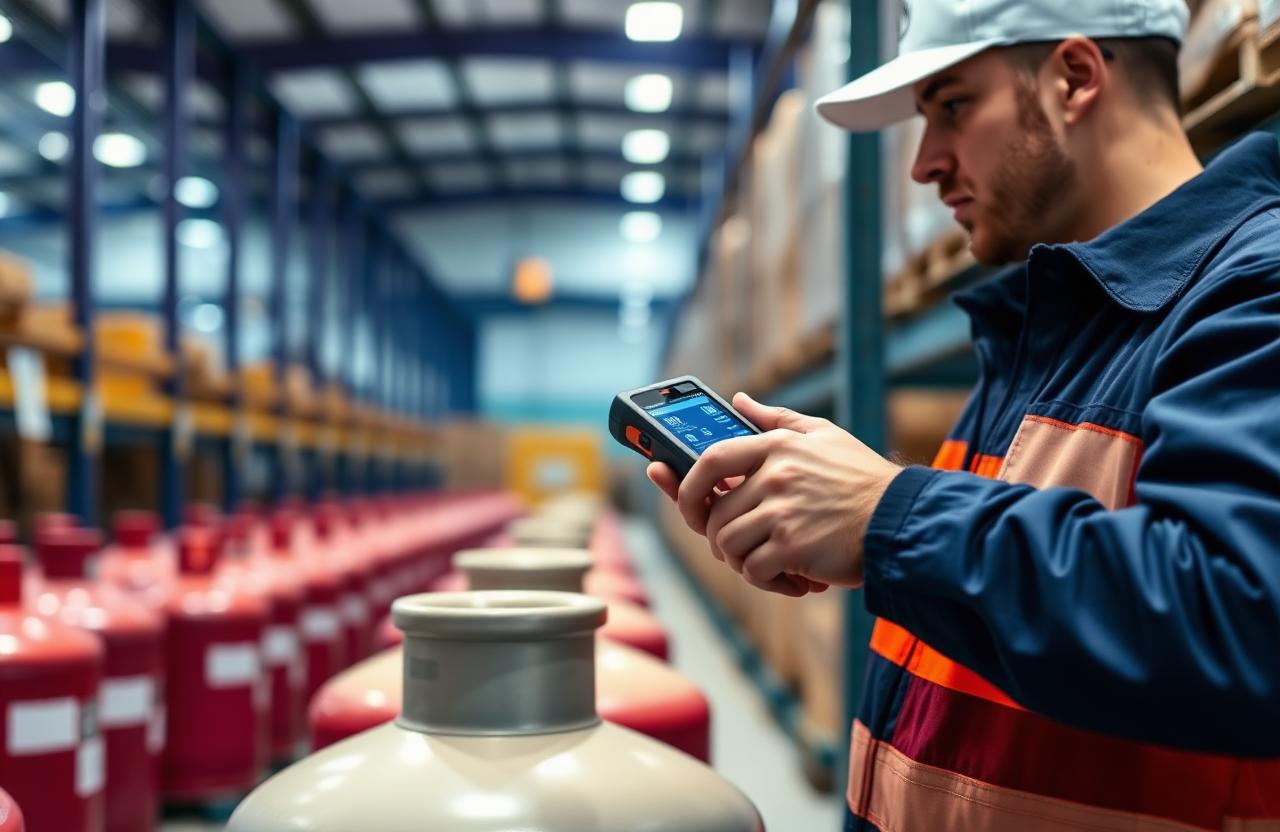
- Capture. At every touchpoint — filling, quality check, dispatch, loading, delivery, return, testing — a scan or reader event captures what happened, when, where and by whom. This is usually done through handheld scanners, gate-mounted RFID readers, or a driver mobile app used at the point of delivery.
- Store. Every captured event flows into a central, cloud-hosted database that becomes the single source of truth for the fleet. No more reconciling three different spreadsheets from three different plants.
- Act. Dashboards, automated alerts and scheduled reports turn the raw event stream into decisions — chasing an overdue customer, blocking a cylinder from being filled because its hydro-test has lapsed, or flagging a branch with unusually high shrinkage.
This loop runs continuously and improves in value the longer it runs, because the historical dataset it builds becomes the foundation for predictive maintenance, demand forecasting and loss-prevention analytics.
Choosing the right identification technology
One of the first practical decisions any company makes when adopting gas cylinder tracking platform technology is which identification method to use. There isn't a single right answer — it depends on volume, environment and budget.
| Technology | Best for | Read speed | Cost per unit | Typical use case |
|---|---|---|---|---|
| --- | --- | --- | --- | --- |
| Barcode | Cost-sensitive fleets, indoor scanning | One at a time | Lowest | Everyday fill and dispatch scanning |
| QR code | Customer-facing "digital passport" | One at a time | Low | Customers self-check cylinder details via phone |
| RFID | High-volume gate reads, bulk counting | Many simultaneously | Higher | Yard gates, bulk loading docks, fast counting |
Most operations that scale past a certain size end up combining technologies: barcode or QR code tagging for everyday item-level scanning, and RFID at high-throughput choke points such as plant gates or loading bays where dozens of cylinders need to be counted in seconds rather than minutes. For a deeper comparison of the two dominant approaches, see our companion article on RFID vs barcode cylinder tracking.
What the underlying data actually unlocks
The value of tracking isn't really the scan itself — it's the dataset that accumulates behind it. Once every movement, fill and test is captured against a serialised cylinder record, that same dataset can power a surprising range of downstream capabilities:
- Loss prevention. Cylinders that have been sitting idle at a customer site for 90+ days are automatically flagged, well before they become a write-off. See our detailed breakdown in why gas companies lose cylinders.
- Predictive testing schedules. Instead of testing cylinders on a fixed calendar regardless of usage, the system can prioritise cylinders based on actual fill cycles and time in service.
- Customer self-service. A customer portal lets clients see their own cylinder holdings, order refills, and check compliance status without calling your office.
- Dispatch optimisation. A cylinder dispatch software module can plan delivery routes and loads based on live, accurate stock positions rather than guesswork.
- Analytics and forecasting. Aggregated movement data feeds cylinder analytics dashboards that reveal seasonal demand, branch performance and fleet utilisation trends management could never see from paper records.
Common objections, and why they don't hold up
Many gas companies hesitate before adopting tracking, usually for one of a handful of reasons. It's worth addressing them directly.
"Our fleet is too old and battered to tag." Modern industrial labels and RFID tags are designed specifically for corroded, oily, high-heat cylinder surfaces, and can be applied during a routine fill or test cycle rather than requiring a separate campaign.
"We don't have the IT staff to run this." Contemporary platforms are cloud-hosted, meaning there's no server to maintain internally — your team logs in through a browser or app, and the vendor handles infrastructure, backups and updates. See our overview of cloud deployment models for gas businesses.
"It's too expensive for our size." Tagging cost per cylinder has fallen dramatically over the past decade, and most vendors offer phased rollouts starting with a single plant or product line, meaning the upfront investment is a fraction of what a full-fleet rollout would cost.
Getting started without disrupting operations
You do not need to tag every cylinder overnight, and trying to do so is usually where ambitious rollouts stall. Successful implementations follow a predictable, low-risk sequence:
- Pick one plant or one gas line to pilot the system, ideally one with a known pain point such as high shrinkage or frequent compliance misses.
- Tag the existing stock during a natural touchpoint — a routine fill, delivery or test — rather than pulling cylinders out of circulation specially.
- Train dispatch and driver staff on scanning at pickup and delivery, since these are the two events that generate the most valuable data.
- Run parallel with your existing paper process for 4-6 weeks to build confidence before retiring the old system.
- Expand plant by plant, using the lessons from the pilot to shorten the rollout time for each subsequent site.
The platforms best suited to this staged approach are ones that support barcode, QR and RFID together from day one, so you never have to re-platform or re-tag cylinders as your needs grow. This is one of the core design principles behind GCT, the Gas Cylinder Tracking Platform — a single platform that scales from a single-plant pilot to a national multi-plant, multi-gas operation without forcing you to switch technologies midway.
Tracking as the foundation for everything else
It's worth stepping back to note that cylinder tracking is rarely valuable in isolation. It is the data foundation that makes every other digital initiative in a gas business possible — from a cylinder ERP that ties inventory to finance, to cylinder rental software that automatically bills based on holding time, to compliance modules that keep you audit-ready under cylinder compliance frameworks. Trying to build any of these on top of unreliable manual data is like building a house on sand — the reports will only ever be as good as the movement data feeding them.
Measuring the return on a tracking investment
Before committing budget, most finance teams want a defensible number rather than a general sense that tracking "should help". The good news is that the return on investment for cylinder tracking is one of the more measurable ROI cases in industrial software, because the inputs are concrete: fleet size, average cylinder replacement cost, current estimated shrinkage rate, average deposit value, and current cost of manual reconciliation labour.
A rough model looks like this: take your total fleet value, apply your current best estimate of annual shrinkage (even a conservative 4-6% for companies who have never measured it), and compare that to the cost of a phased rollout across your plants. In almost every case we have modelled, the loss-prevention savings alone recover the investment within the first twelve to eighteen months, before even counting the labour hours saved on manual reconciliation, the reduction in customer disputes over deposits, or the avoided cost of a single serious compliance incident. Tools like our ROI calculator let you plug in your own fleet numbers and see a tailored estimate rather than an industry average.
It is also worth accounting for softer, harder-to-quantify benefits that still show up on the bottom line over time: fewer emergency cylinder purchases because existing stock is used more efficiently, faster customer onboarding because account teams can quote accurate cylinder availability, and a measurable drop in disputes with customers over how many cylinders they are holding, since both sides can see the same digital record through a customer portal.
Frequently asked questions
Does cylinder tracking require replacing our existing ERP or accounting system? No. Most tracking platforms integrate with existing finance and ERP systems through APIs, feeding accurate movement and billing data into your existing books rather than replacing them.
How long does a typical single-plant rollout take? Most single-plant pilots go live within four to eight weeks, including tagging existing stock and training staff on scanning procedures.
Can tracking work for a fleet that includes cylinders from multiple owners or partner companies? Yes — modern systems support multi-owner fleets, distinguishing between your own cylinders, third-party owned cylinders, and customer-owned cylinders within the same database.
What happens if a tagged label is damaged or falls off? The digital record is tied to the cylinder's serial number, so a damaged label simply needs to be reprinted and reapplied; the underlying history is not lost.
Is RFID mandatory, or can we start with barcode alone? Barcode-only rollouts are common and perfectly viable for smaller or lower-throughput operations; RFID becomes valuable once volume at a single point — like a plant gate — makes one-at-a-time scanning a bottleneck.
Bringing it all together
Gas cylinder tracking is not a single feature or a single piece of hardware — it is an operating model built around one simple idea: every cylinder should have a digital identity that follows it through its entire working life, and every movement of that cylinder should generate a record that the business can act on. Companies that make this shift stop discovering losses at year-end audits, stop missing test deadlines, and stop reconciling deposits by phone call. They start running their fleet the way a modern logistics business runs a fleet of trucks — with full, real-time visibility.
If you are weighing where to start, the fastest way to see what this looks like for your own operation is to walk through it with a specialist who understands industrial and medical gas workflows specifically, rather than generic asset tracking. Book a free demo and we will map cylinder tracking to your exact plant layout, gas mix and customer base, or get in touch if you have questions before you're ready for a walkthrough.
Explore related GCT software
Put the ideas in this article into practice with the GCT modules and technologies built for it.
Run a smarter cylinder fleet with GCT
GCT gives gas companies barcode, QR & RFID tracking, automated billing, compliance dashboards and a mobile field app — all in one platform.
Running an enterprise gas distribution operation? Explore the Cylinder Tracking Management System at ctmsgas.com for enterprise-grade cylinder ERP deployments.