
How to Choose Gas Cylinder Tracking Software (2026 Buyer's Guide)
Choosing gas cylinder tracking software is not a routine procurement decision — it is a multi-year commitment that touches finance, safety, field operations and customer relationships all at once. Get it right and the payback compounds every year through fewer losses, faster dispatch and cleaner compliance records. Get it wrong and you are looking at a costly re-implementation two or three years down the line, with staff who have already grown skeptical of "the new system." This guide lays out a structured way to evaluate vendors so the decision is based on evidence rather than the shininest demo.
Why this decision is harder than it looks
On the surface, cylinder tracking software all looks similar: scan a cylinder, see where it is, generate a report. The differences that actually matter — how the system handles ambiguous scans, how well it survives a plant with patchy internet, how much manual reconciliation your finance team still has to do every month — only reveal themselves once you are several months into daily use. That is exactly why a structured evaluation process, done before signing, is worth the extra weeks it takes.
Step one: define the outcomes you are buying, not the features
Before you take a single vendor call, sit down with operations, finance and compliance leads and write down the three or four problems that are actually costing you money or risk today. Common starting points include:
- Cylinders that go missing with no record of where they were last seen
- Hydro-test and inspection dates that are tracked in spreadsheets and routinely missed
- Deposit and rental disputes with customers because there is no reliable proof of delivery or return
- Dispatch delays because loading staff cannot quickly confirm what is on a truck
- No visibility into which customers are sitting on cylinders far longer than their contract allows
Every subsequent evaluation step should trace back to these outcomes. If a vendor's flagship feature does not address one of your named problems, it is a nice-to-have, not a deciding factor.
The core capabilities that separate real platforms from spreadsheets with a UI
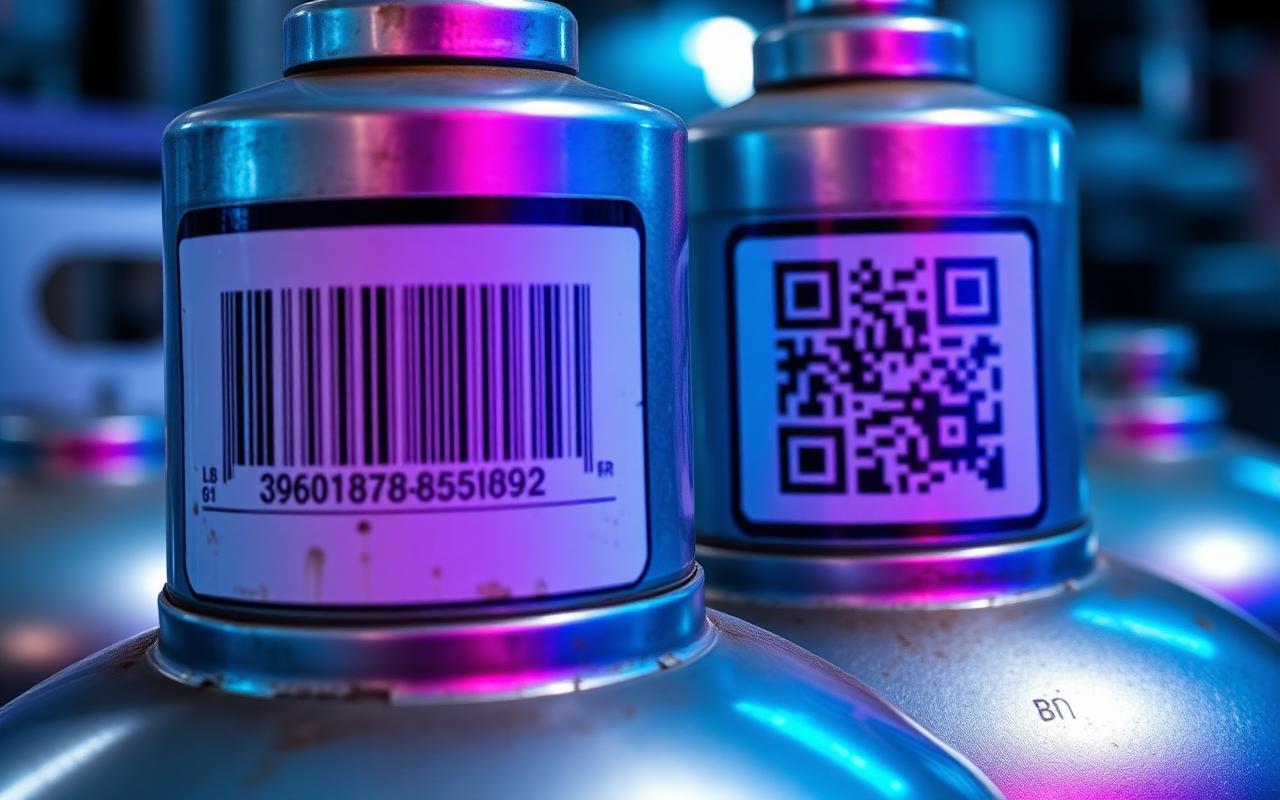
- Multi-mode identification. The best systems support barcode, QR code and RFID identification within the same platform, so you are never locked into a single hardware ecosystem and can mix technologies by cylinder class or site.
- Complete lifecycle tracking. Filling, testing, dispatch, delivery, return and reconciliation should all live in one continuous record per cylinder — not scattered across separate modules that have to be manually cross-referenced. This is the essence of true cylinder lifecycle management.
- Automated financial ledgers. Deposits, rentals and demurrage should be calculated automatically from movement events, not re-keyed into accounting software by a clerk at month-end.
- Offline-first mobile scanning. Field and warehouse staff need an app that keeps working — and queues data for sync — when connectivity drops, which it will, especially at rural depots or basements. Review the Driver Mobile App capabilities specifically for this.
- Compliance dashboards with due-date alerts. Hydro test and inspection due dates should surface automatically, ranked by urgency, not buried in a report nobody opens until it's too late.
- A genuine, documented API. Integration with Tally, BUSY, SAP, Oracle or a custom ERP should not require a bespoke consulting engagement every time you want new data flowing between systems.
- Customer self-service. A customer portal that lets large accounts see their own cylinder balances reduces disputes and inbound call volume simultaneously.
Comparing platform types
| Approach | Typical strength | Typical weakness |
|---|---|---|
| --- | --- | --- |
| Spreadsheet + manual logs | Zero licence cost, familiar to staff | No audit trail, error-prone, does not scale past a few hundred cylinders |
| Generic inventory/ERP module | Already owned, single system | Not built for cylinder-specific events like deposits, hydro tests, or rentals |
| Point barcode/QR scanning app | Cheap, fast to deploy | Limited lifecycle and financial logic, weak reporting |
| Dedicated cylinder tracking platform (e.g. GCT) | Full lifecycle, compliance and financial logic purpose-built for gas cylinders | Requires proper onboarding and change management |
| Custom-built in-house system | Tailored exactly to current process | Expensive to maintain, no vendor roadmap or support |
For most distributors, fillers and industrial gas operators, a dedicated platform purpose-built around cylinder lifecycle events — like a gas cylinder tracking platform paired with cylinder ERP capability — delivers the best balance of speed to value and long-term maintainability.
Questions every vendor should be able to answer clearly
- How do you handle a cylinder scanned at two locations on the same day? This reveals how the system resolves data conflicts — a weak answer here means messy reconciliation later.
- What happens to our data if we leave? You should get a clear, written answer on data export formats and timelines, not a vague reassurance.
- How are software updates delivered, and what do they cost? Understand whether updates are included in your subscription or billed as separate projects.
- Can the mobile app work fully offline and sync later, and what happens if two staff scan the same cylinder while offline?
- What is the typical go-live timeline for a fleet our size, and what does the first 90 days actually involve?
- How is RFID, barcode or QR hardware sourced, configured and supported after go-live?
- Can we run a pilot at one site before committing to a fleet-wide rollout?
- What reporting exists out of the box for demurrage, deposits and loss tracking, without custom development?
Vendors who answer these with specifics — screenshots, sample exports, named references — are demonstrating a mature product. Vendors who answer only in generalities are asking you to trust marketing over evidence.
Comparing pricing fairly
Sticker price comparisons are almost always misleading in this category. To compare fairly, build a like-for-like three-year total cost of ownership model that includes:
- Per-cylinder or per-user licence cost, scaled to your actual fleet size
- Implementation and onboarding fees, including data migration from spreadsheets or legacy systems
- Hardware costs for scanners, tags, and mobile devices, factoring in cylinder dispatch software hardware requirements if gate scanning is planned
- Training costs, both initial and for ongoing staff turnover
- Ongoing support and update costs, including whether premium support tiers exist
- Integration costs with your existing accounting or ERP system
A cheaper base licence bundled with expensive implementation services and per-integration fees will often cost more over three years than a higher base price with transparent, bundled services. Ask every finalist vendor for a full three-year quote broken into these categories so you can compare apples to apples.
Evaluating fit for your specific industry
Not every cylinder operation has the same priorities. A hospital network managing medical gas cylinders cares intensely about chain-of-custody documentation and regulatory audit trails. An LPG distributor cares about high-volume dispatch speed and deposit reconciliation across thousands of retail customers. A cryogenic gas provider needs the platform to handle bulk vessel tracking alongside standard cylinders. Ask each vendor for reference customers in your specific industry, not just generic case studies, and probe whether their cylinder compliance and cylinder testing workflows map to your actual regulatory environment.
The rollout checklist
- Pilot on one plant or depot first. Resist the temptation to roll out fleet-wide on day one; a contained pilot surfaces process gaps before they multiply.
- Clean your cylinder master data before go-live. Duplicate records, missing serial numbers and inconsistent naming conventions will undermine even the best software if migrated as-is.
- Train field staff early, not the week before go-live. Scanning discipline is a habit, and habits need repetition to form before they are relied upon for financial reporting.
- Establish a single source of truth. Decide explicitly which system governs cylinder location and ownership status once live, and retire parallel spreadsheets immediately — running two systems in parallel indefinitely guarantees discrepancies.
- Set a realistic go-live date with a buffer. Build in two to three weeks of shadow-running the new system alongside the old process before fully cutting over.
- Define escalation ownership. Decide in advance who resolves data conflicts, exception scans and edge cases so the pilot does not stall on unanswered questions.
- Review results at 30, 60 and 90 days. Measure against the outcomes you defined in step one — are losses down, is dispatch faster, are compliance alerts actually being actioned?
A note on change management
Software alone does not fix cylinder losses or compliance gaps — it makes the right behaviour easy and the wrong behaviour visible. The vendors who succeed with customers are the ones who invest in training, clear escalation paths and dashboards that supervisors actually check daily. When evaluating a shortlist, ask for direct contact with a live customer of similar size and industry, and ask that customer specifically about the first 90 days, not just the eventual outcome.
Involving the right stakeholders in the evaluation
A common reason cylinder tracking implementations stall or get rejected by staff after go-live is that the purchasing decision was made without input from the people who would use the system daily. Warehouse supervisors, delivery drivers, test bay technicians and accounts receivable staff all interact with the system differently, and each group can surface requirements that a purely IT- or finance-led evaluation would miss. A driver, for instance, can tell you immediately whether a mobile app's scanning workflow is fast enough to use during a real delivery run with an impatient customer waiting; a test bay technician can tell you whether a compliance dashboard actually reflects the sequence of steps a hydro test requires. Building a small cross-functional evaluation panel, even if only for the final vendor demos, surfaces these practical concerns before they become post-implementation complaints.
Red flags to watch for during vendor demos
Vendor demonstrations are, by design, choreographed to show the product at its best. A few patterns are worth watching for that often indicate deeper weaknesses:
- The demo only ever shows a clean, pre-populated dataset. Ask the vendor to demonstrate the system with intentionally messy or duplicate data to see how gracefully it handles real-world conditions.
- Every question about edge cases gets deferred to "we can customize that." Frequent reliance on custom development for basic functionality is a sign the core product may not be purpose-built for cylinder tracking.
- No reference customer will speak with you directly. A vendor confident in their product and customer relationships should be able to arrange at least one reference call with a customer of comparable size and industry.
- Pricing is not available in writing until late in the process. Vendors who withhold clear pricing until deep into the sales cycle often do so because the eventual number is higher than initial conversations suggested.
- The mobile app has never been tested by the sales team on an actual factory floor or delivery route. If the person demoing the product cannot speak confidently about how it performs in poor lighting, gloved hands, or spotty connectivity, that is a meaningful gap.
Data migration: the step that is most often underestimated
Almost every organisation evaluating cylinder tracking software already has some form of existing record — spreadsheets, a legacy inventory system, or paper logbooks going back years. Migrating this historical data cleanly into the new platform is frequently underestimated in project timelines, yet it directly determines how useful early compliance and loss-prevention reporting will be. Before finalising a vendor, ask specifically how they handle migration of historical hydro-test dates, customer deposit balances, and cylinder serial number records, and request a sample migration on a subset of your real data during the evaluation period rather than taking migration capability on faith. A vendor that offers to run this proof-of-concept migration during the sales process, rather than only after contract signature, is demonstrating genuine confidence in their tooling.
Security, access control and audit trail considerations
Cylinder tracking systems increasingly sit at the intersection of operational and financial data, since deposit balances, customer ledgers and compliance records all flow through the same platform. This makes access control and audit trail integrity a meaningful evaluation criterion, not an afterthought. Ask vendors how they handle role-based permissions — should a delivery driver be able to edit a deposit balance, or only record a delivery event? Ask whether every data change is logged with a user identity and timestamp, which matters both for internal accountability and for defending records during a regulatory audit or a customer dispute. Cloud-hosted platforms should also be able to describe their data backup frequency and disaster recovery approach in specific terms, not generic assurances, particularly if your operation would be significantly disrupted by even a few hours of system unavailability during a peak dispatch period. For a broader look at these platform considerations, see cloud technology in cylinder tracking infrastructure.
Frequently asked questions
How long does a typical implementation take? For a single plant or depot, most cylinder tracking implementations go live within four to eight weeks, assuming master data is reasonably clean. Multi-site rollouts are typically phased site by site over several months rather than attempted all at once.
Do we need RFID, or is barcode/QR enough? Many operations start with barcode or QR because it is lower cost per cylinder and easier to deploy, then add RFID selectively for high-volume gate reads once the core workflow is proven. There is no universal answer — it depends on cylinder volume and how much manual scanning your team can realistically sustain.
Can this integrate with our existing accounting software? Most mature platforms offer connectors or a documented API for common systems like Tally, BUSY, SAP and Oracle. Confirm the specific integration exists for your system during evaluation rather than assuming generic "ERP integration" claims cover your case.
What if our internet connectivity is unreliable at some sites? This is precisely why offline-first mobile scanning matters. Confirm during a trial that the mobile app genuinely queues and syncs data without loss when connectivity drops, rather than simply refusing to function offline.
How do we justify the cost internally? Tie the business case directly to the outcomes identified in step one — quantify current losses, disputed deposits or compliance fines, and compare that figure against the three-year total cost of ownership. A ROI calculator can help build this case with your own numbers rather than generic industry averages.
Choosing the right platform is ultimately about disciplined evaluation against your own defined outcomes, not about finding the vendor with the longest feature list. If you want to see how a purpose-built platform handles these questions in practice, explore why GCT, review the full GCT product suite, or book a demo to walk through your specific fleet scenario with our team.
Explore related GCT software
Put the ideas in this article into practice with the GCT modules and technologies built for it.
Run a smarter cylinder fleet with GCT
GCT gives gas companies barcode, QR & RFID tracking, automated billing, compliance dashboards and a mobile field app — all in one platform.
Running an enterprise gas distribution operation? Explore the Cylinder Tracking Management System at ctmsgas.com for enterprise-grade cylinder ERP deployments.