QR Code
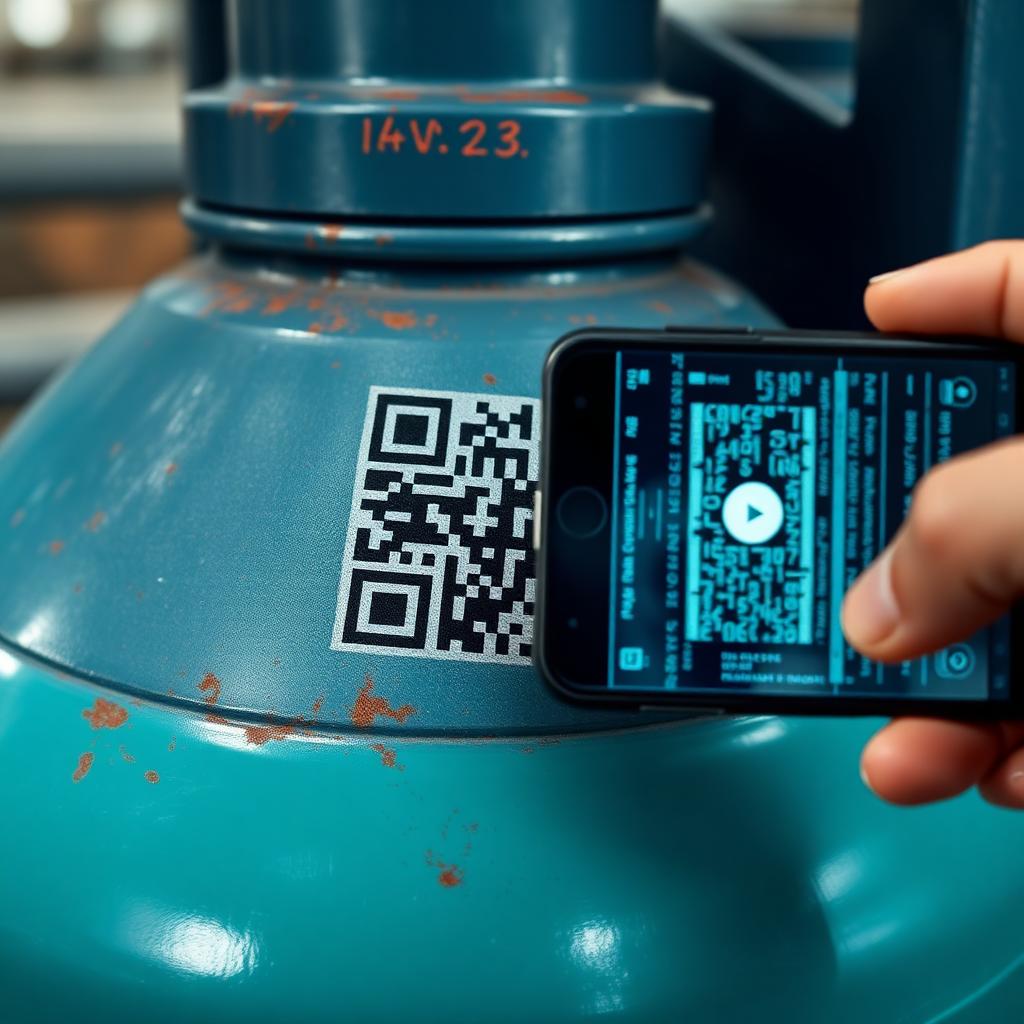
QR codes are 2D barcodes that pack far more data than a 1D barcode and can be read from almost any angle by an ordinary smartphone camera.
For cylinders, this means each QR becomes a 'digital passport' — one scan opens the cylinder's identity, test dates, ownership and history, right in the palm of whoever is handling it.
Because everyone already carries a QR reader in their phone, QR is uniquely suited to customer- and field-facing tracking without any special hardware.
Key benefits
Readable by any phone
Standard smartphone cameras open QR codes — no dedicated scanner needed.
Richer data
QR stores more information and links straight to a full digital passport.
Customer-facing
Clients can self-verify cylinders and holdings by scanning.
Forgiving to scan
QR reads from many angles and tolerates partial damage.
What's included
- 2D QR digital passport per cylinder
- Smartphone-native scanning
- Etched or labelled QR options
- Instant test-date and status lookup
- Customer and driver self-scan
- Deep link into full cylinder history
Frequently asked questions
How is QR different from a normal barcode?
QR is a 2D code that holds more data, reads from more angles, and can be scanned by any phone — ideal for opening a full cylinder passport.
Do users need a special app?
No, standard smartphone cameras read QR codes, which is why QR works so well for customers and field staff.
Can QR be applied permanently?
Yes — QR can be laser-etched onto the cylinder or applied as rugged labels for long service life.
What does scanning a cylinder QR show?
Its identity, gas type, ownership, last and next test dates, status and movement history.
Ready to gain full control of every cylinder?
Book a personalized GCT demo and see how leading gas companies eliminate cylinder losses.