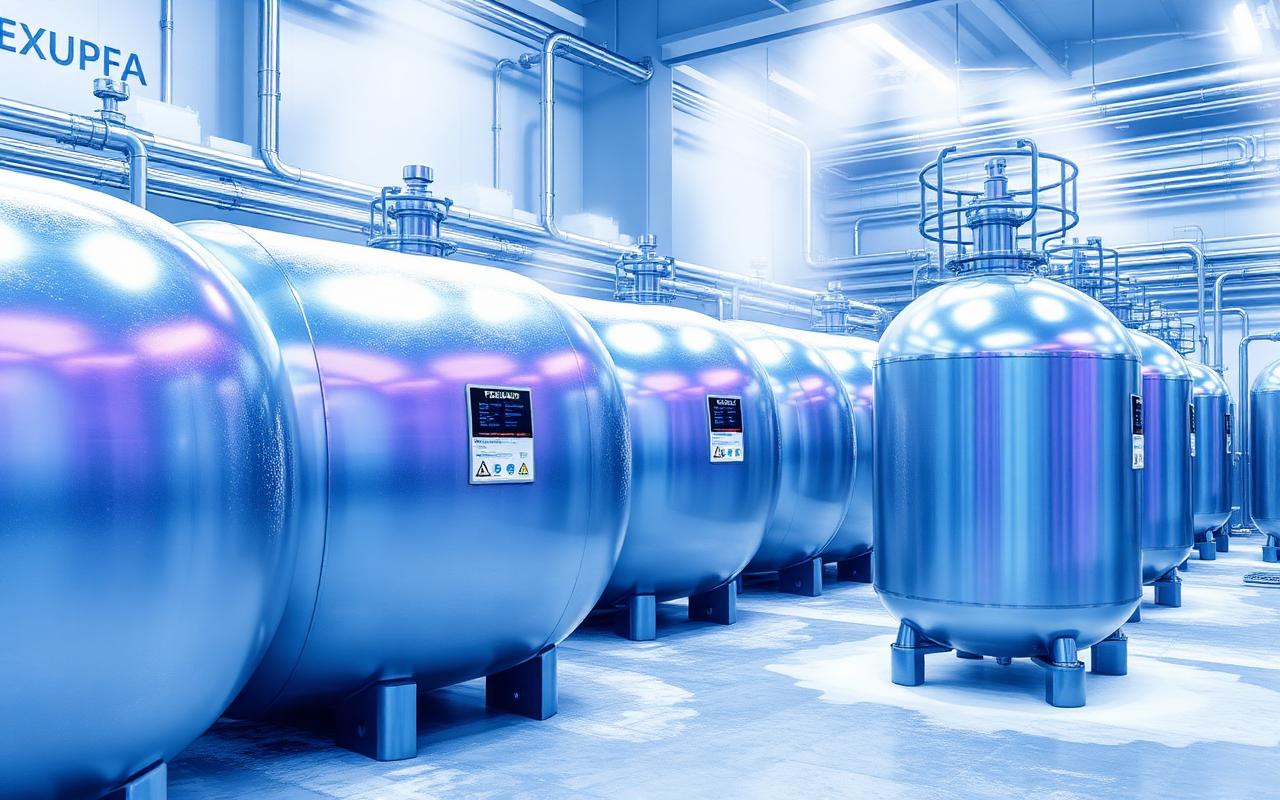
Cryogenic Cylinder & Dewar Tracking: What's Different
Cryogenic cylinders and dewars — holding liquid nitrogen, liquid oxygen, liquid argon, liquid carbon dioxide or LNG — sit in a different category from standard high-pressure gas cylinders in almost every operational sense. They are more expensive to manufacture, more delicate to handle, and unlike a compressed-gas cylinder that holds its contents indefinitely once sealed, a cryogenic vessel is quietly losing product every single day it sits in the field. Tracking them well requires a different mental model, and often a different tracking system architecture, from the one built for standard cylinders.
Why cryogenic assets demand a different approach
A standard industrial gas cylinder, once filled and valve-closed, holds its contents essentially unchanged until it is opened. A cryogenic dewar cannot make that promise. Liquid gases are stored below their boiling point using vacuum insulation, and no insulation is perfect — heat inevitably leaks in, and the liquid slowly boils off as vapour that vents through a pressure-relief mechanism to keep the vessel safe. This process, known as boil-off, means that time itself is a cost variable for a cryogenic asset in a way it simply is not for a compressed cylinder.
This single difference cascades into several tracking requirements that a generic cylinder tracking approach will miss if it is not specifically designed for cryogenics:
- Hold time matters as much as location — a dewar that has been sitting at a customer site for three weeks has lost meaningfully more product than one delivered yesterday, even if both show the same GPS location
- Net content changes continuously — the quantity billed or reconciled cannot simply be "what was filled"; it has to account for expected boil-off against elapsed time
- Vacuum integrity is a safety-critical maintenance item, not a cosmetic one — a failing vacuum jacket dramatically accelerates boil-off and can become a safety hazard
- Asset value is concentrated — a fleet of a few hundred dewars can represent a capital investment comparable to thousands of standard cylinders, which changes how tightly you want to control custody and utilisation
What to track beyond simple location
A tracking system built for cryogenics needs to model several additional data points on top of the standard identity, ownership and location fields used for compressed cylinders.
Hold time and dwell tracking
Every dewar movement — dispatch, delivery, return — should timestamp precisely, so the system can calculate cumulative hold time at each stop. This is the single most useful signal for spotting product loss before it becomes a customer complaint: a dewar with unusually long dwell time at a customer site is one worth proactively checking on, either through a service visit or a remote telemetry read, well before it is due back empty.
Fill quantity and expected depletion curves
Recording the exact fill quantity and the vessel's known boil-off rate lets the system project expected remaining content at any point in time. Comparing that projection against what is actually measured on collection surfaces two very different problems: normal expected loss (nothing to act on) versus abnormal loss that suggests a vacuum or valve fault (something to service immediately).
Maintenance and vacuum integrity history
Because vacuum-insulated vessels degrade gradually and sometimes without obvious external signs, a maintenance record tied to the individual serial number — vacuum test results, valve servicing, insulation checks, pressure-relief device certification — needs to travel with the asset for its entire service life. This maintenance history should feed directly into a broader Cylinder Maintenance Management programme rather than sitting in a separate paper file that nobody cross-references at dispatch time.
Ownership and high-value custody controls
Given the capital cost per unit, cryogenic fleets typically warrant tighter custody accountability than standard cylinders — more frequent physical reconciliation, stricter approval workflows before a dewar leaves the depot, and closer scrutiny of any unit that goes unreturned past its expected cycle. A Cylinder Inventory Software platform that lets you segment cryogenic assets into their own tracking class, with their own alert thresholds and reconciliation cadence, avoids diluting this scrutiny inside a general-purpose cylinder register.
The case for IoT telemetry
Because cryogenic loss is continuous and gradual rather than a single discrete event, remote telemetry adds far more value here than it typically does for standard compressed cylinders. Level and pressure sensors fitted to dewars can report:
- Current liquid level or remaining content, without waiting for the vessel to be returned and weighed
- Internal pressure trends that can flag an early vacuum degradation issue before it becomes a full failure
- Location, confirming the vessel is where it is expected to be
- Usage rate at the customer site, which supports smarter replenishment scheduling
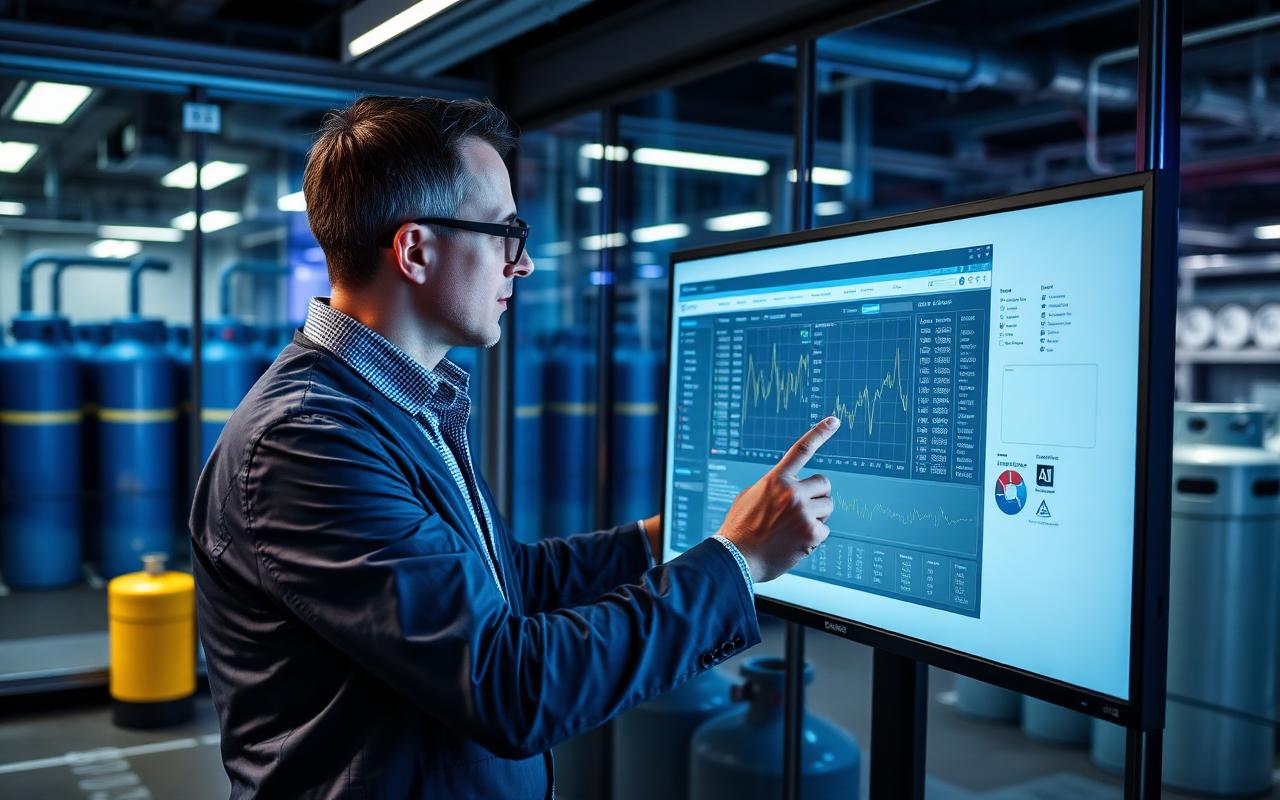
This telemetry, fed into the same platform that manages dispatch and billing, allows a supplier to move from reactive replenishment — waiting for a customer call saying they are running low — to proactive scheduling based on actual consumption trends. It also gives an early warning system for abnormal boil-off, letting a service team intervene before a vessel arrives back at the depot essentially empty and requiring unplanned maintenance. Read more in our companion piece on IoT in cylinder tracking and explore the underlying IoT technology used in these deployments.
Billing implications of boil-off
Boil-off complicates billing in a way flat per-cylinder rental models never had to account for. Some suppliers bill purely on rental days regardless of content, which is simple but does not reflect actual product delivered. Others bill on net content delivered versus net content returned, which is fairer to the customer but requires an accurate, trusted measurement process — exactly where telemetry-backed digital records earn their keep, since a customer is far more likely to accept a system-generated reading than a manually estimated one during a dispute.
| Billing approach | How it works | Risk if done manually |
|---|---|---|
| --- | --- | --- |
| Flat rental per day | Charge based on days held, regardless of content used | Simple but can feel unfair to low-usage customers, hurting retention |
| Content-based billing | Charge on net litres/kg consumed, measured at fill and return | Manual weighing is slow and disputable; telemetry closes this gap |
| Hybrid model | Base rental plus consumption charge | Requires reliable, auditable data on both hold time and content |
| Deposit-based custody | Refundable deposit tied to vessel return | Needs accurate hold-time tracking to trigger demurrage correctly |
Reconciliation and physical audits
Because cryogenic units carry disproportionate capital value, a periodic physical reconciliation — counting actual vessels against the digital register, location by location — should happen more frequently than for standard cylinders. Any mismatch deserves prompt investigation rather than being carried forward as an accepted variance, since a small number of unreconciled dewars can represent a large financial exposure even when the percentage of the fleet looks small on paper.
Industry contexts where this matters most
Cryogenic tracking discipline pays off differently depending on the industry it serves. In healthcare, liquid oxygen supply to hospitals carries direct patient-safety stakes if a dewar runs unexpectedly low overnight, making proactive telemetry-based replenishment far more than a cost optimisation — it is a continuity-of-care safeguard. In food and beverage processing, liquid nitrogen and liquid carbon dioxide dewars used for flash-freezing or modified-atmosphere packaging need tight consumption tracking because production lines can stall quickly if supply runs short mid-shift. In electronics and semiconductor manufacturing, ultra-high-purity liquid gases demand not just quantity tracking but also strict provenance records, since any doubt about a batch's purity history can halt a production run. In each of these contexts, the underlying tracking discipline is the same — hold time, net content, maintenance status, and telemetry-backed alerts — even though the operational consequence of getting it wrong differs.
Working with third-party logistics and returnable fleets
Many gas suppliers do not own every dewar in circulation outright; some are leased from vessel manufacturers or managed jointly with third-party logistics partners who handle transport and cleaning between cycles. This adds a layer of complexity to tracking, since custody responsibility can shift between organisations mid-cycle. A shared or interoperable tracking record — ideally accessible to both the gas supplier and the logistics partner through role-based access — avoids the finger-pointing that otherwise occurs when a vessel is returned late, damaged, or with an unexplained content shortfall. Building this shared visibility into contractual service-level agreements up front, rather than relying on ad hoc phone calls after a dispute arises, saves considerable relationship friction over the life of a leasing arrangement.
Training field and depot staff on cryogenic-specific handling
Even the best tracking system depends on staff correctly logging events — fill quantities, dispatch times, return conditions and any visible signs of vessel damage. Cryogenic-specific training should go beyond the safety basics of frostbite and asphyxiation risk to also cover why accurate data capture matters commercially: a dispatch clerk who understands that a mistyped fill quantity distorts the depletion curve used for both billing and maintenance alerts is far more likely to take the extra few seconds to get it right. Building this data-quality awareness into onboarding, alongside the standard safety induction, measurably improves the reliability of everything downstream in the tracking system.
Forecasting demand from telemetry history
Once a fleet has accumulated even a few months of telemetry-backed consumption data, that history becomes a forecasting asset in its own right. Rather than scheduling replenishment routes purely on fixed cycles or reactive customer calls, planners can model expected depletion per customer site and build delivery routes around projected need dates. This shifts route planning from a purely reactive exercise to a predictive one, reducing both emergency deliveries — which are expensive and disruptive — and unnecessary early top-ups that tie up vessels that could otherwise be serving another customer. Over a full network, this kind of demand-driven scheduling often improves vessel utilisation more than any single hardware upgrade, because it directly reduces the number of dewars sitting idle in transit or in early replenishment cycles.
Implementing cryogenic tracking: a step-by-step approach
- Segment your fleet so cryogenic dewars are managed as a distinct asset class with their own fields, alert thresholds and reconciliation cadence inside your tracking platform
- Capture full identity and specification data per serial number — capacity, vacuum rating, boil-off rate, last vacuum test date — as a one-time data migration exercise
- Fit telemetry to your highest-value or highest-risk units first, then expand coverage as the return on the sensor investment becomes clear
- Configure hold-time and expected-depletion alerts so dispatch and customer service teams are notified automatically when a unit is running long or showing abnormal loss
- Route vacuum integrity and valve servicing data into your maintenance module, with hard alerts blocking redeployment of any unit overdue for a vacuum check
- Set a reconciliation schedule appropriate to fleet value — monthly or even more frequent for very high-value units — and track variances as a management metric, not a footnote
- Review billing model performance quarterly against actual boil-off data to confirm pricing still reflects real product loss and vessel dwell patterns
Frequently asked questions
How is boil-off actually measured in a digital tracking system? Either through periodic weighing at fill and return, or more precisely through continuous level/pressure telemetry that reports remaining content throughout the rental period, letting the system calculate loss over time rather than only at the two endpoints.
Do all cryogenic dewars need IoT sensors? Not necessarily every unit — many operators start with their highest-value or highest-risk vessels and expand coverage over time, since sensor cost needs to be weighed against the value and criticality of each unit class.
How often should vacuum integrity be checked? This depends on vessel design, manufacturer guidance and usage intensity; the important operational point is that whatever interval you set should be enforced through your maintenance module rather than tracked informally, since a failing vacuum jacket is both a cost and safety issue.
Can the same platform manage both standard and cryogenic cylinders? Yes, provided the platform supports distinct asset classes with different fields, alert rules and reconciliation cadences — trying to force cryogenic-specific data into a generic cylinder record usually results in important signals like hold time and boil-off going untracked.
What is the biggest tracking mistake operators make with cryogenic fleets? Treating dwell time as a location question rather than a value-loss question. A dewar "at the right location" can still be silently losing product every day it sits unused, and a tracking system that does not surface hold-time and depletion trends will miss this until the customer or the depot notices the shortfall.
Data quality as the foundation of every downstream benefit
It is worth stating plainly: none of the billing accuracy, predictive replenishment, or maintenance discipline described above is achievable if the underlying event data is unreliable. Every benefit in this article traces back to a small number of data capture points being recorded consistently — fill quantity at dispatch, timestamp at delivery, condition and reading at return, and vacuum test results at service. Operators who invest in getting these few data points right, through a combination of scanning, telemetry and simple staff discipline, unlock disproportionate value relative to the effort involved, because every other capability in a cryogenic tracking programme is built on top of that foundation.
A quick pre-deployment checklist
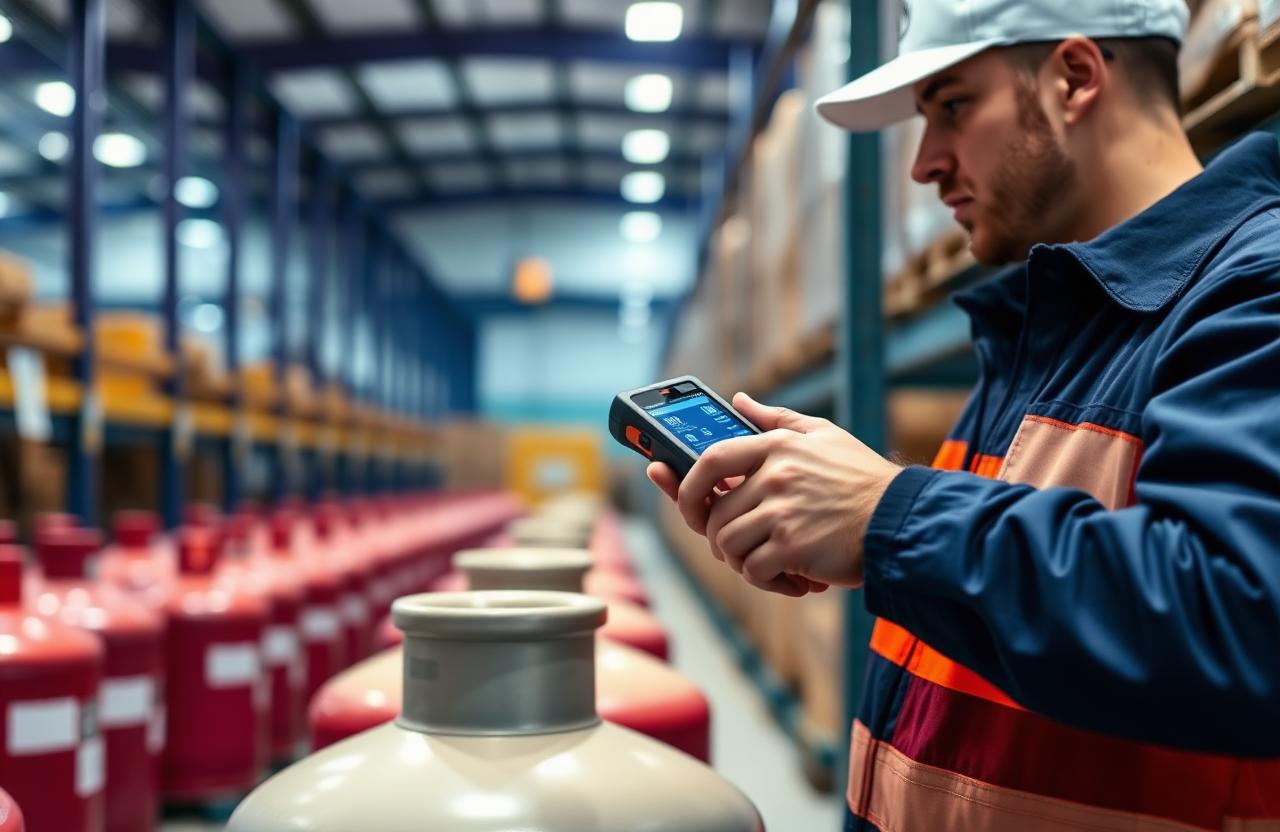
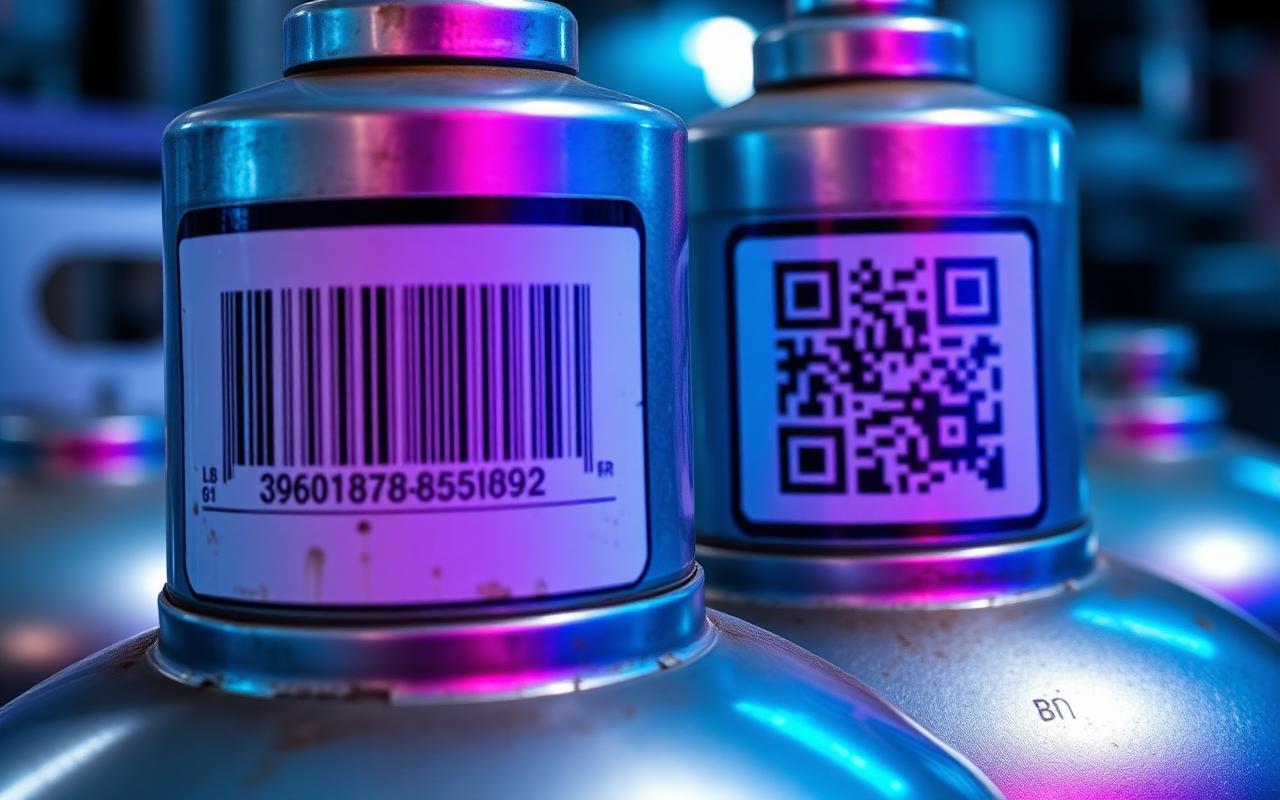
Before rolling out a cryogenic tracking programme fleet-wide, confirm the basics: serial numbers are uniquely identifiable and scannable, boil-off rates are documented per vessel type, telemetry connectivity has been tested at representative customer sites, and staff across depot and delivery roles understand which data points they are responsible for capturing. Skipping this short checklist is the most common reason early rollouts stall — not because the platform lacks capability, but because the underlying asset data was incomplete on day one.
Bringing it all together
Cryogenic cylinders and dewars reward operators who track them as living, depleting assets rather than static containers. A platform that models hold time, net content, maintenance history and telemetry alongside standard identity and location data gives you the visibility to catch abnormal loss early, bill fairly and defensibly, and protect the capital tied up in a high-value fleet. Explore how the Cryogenic Industry solution inside GCT brings these capabilities together, read our related piece on IoT in cylinder tracking, estimate potential savings with the ROI calculator, or book a demo to see cryogenic-specific tracking in action against your own fleet data. You can also reach the team through contact with specific questions about your telemetry and integration needs.
Explore related GCT software
Put the ideas in this article into practice with the GCT modules and technologies built for it.
Run a smarter cylinder fleet with GCT
GCT gives gas companies barcode, QR & RFID tracking, automated billing, compliance dashboards and a mobile field app — all in one platform.
Running an enterprise gas distribution operation? Explore the Cylinder Tracking Management System at ctmsgas.com for enterprise-grade cylinder ERP deployments.