Oxygen Cylinder Traceability: From PSA Plant to Patient
Medical oxygen is not an ordinary industrial commodity — it is a life-critical product administered directly to patients, and traceability is not a nice-to-have feature bolted onto a distribution system. It is a legal, clinical, and operational necessity. Every cylinder must be individually identifiable, its fill history and test dates verifiable at any moment, and its physical location known with confidence at every stage of its journey from the PSA plant or refilling station to the patient's bedside. This guide sets out what a genuinely robust oxygen cylinder traceability chain looks like, why it matters more today than ever, and how gas suppliers and hospitals can build one without adding friction to already stretched clinical teams.
Why oxygen traceability carries higher stakes than other gases
Industrial gases carry their own safety requirements, but the consequences of a traceability failure in medical oxygen are immediate and human. If a batch of oxygen fails a purity check after it has already been dispatched, a supplier without robust traceability has no reliable way to identify which specific cylinders came from that batch, which hospitals received them, or which wards they are currently sitting in. In a worst-case scenario, that gap becomes a patient safety incident rather than a paperwork problem.
The COVID-19 pandemic made this risk starkly visible worldwide. Hospitals facing sudden oxygen demand surges needed to know, in real time, exactly how many cylinders were available, where they were located, and which ones were due for return or refill — information that manual, paper-based systems simply could not deliver fast enough. Regulators in many markets responded by tightening documentation requirements around medical gas handling, and healthcare procurement teams increasingly treat traceability infrastructure as a baseline requirement for any oxygen supplier they contract with, not an optional differentiator.
The traceability chain, stage by stage
A complete traceability chain has to account for every stage a cylinder passes through, with no gaps where a cylinder's status or history becomes uncertain.
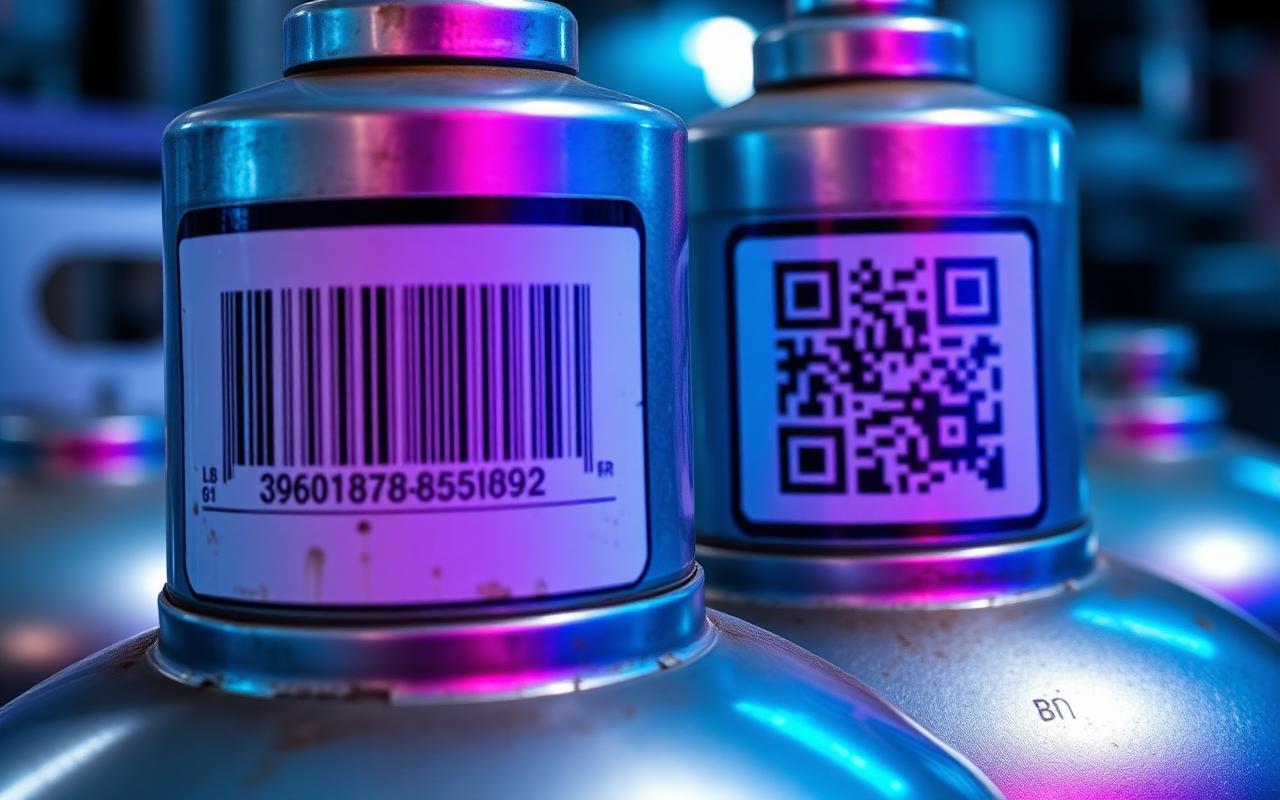
- Filling. At the point of filling, the operator must record the batch number, the purity check result, and the fill date, and link all three directly to the cylinder's unique digital identity — typically via a barcode, QR code, or RFID tag physically attached to the cylinder body. This linkage is what allows a later quality issue to be traced backward to a specific batch and forward to every cylinder that batch touched.
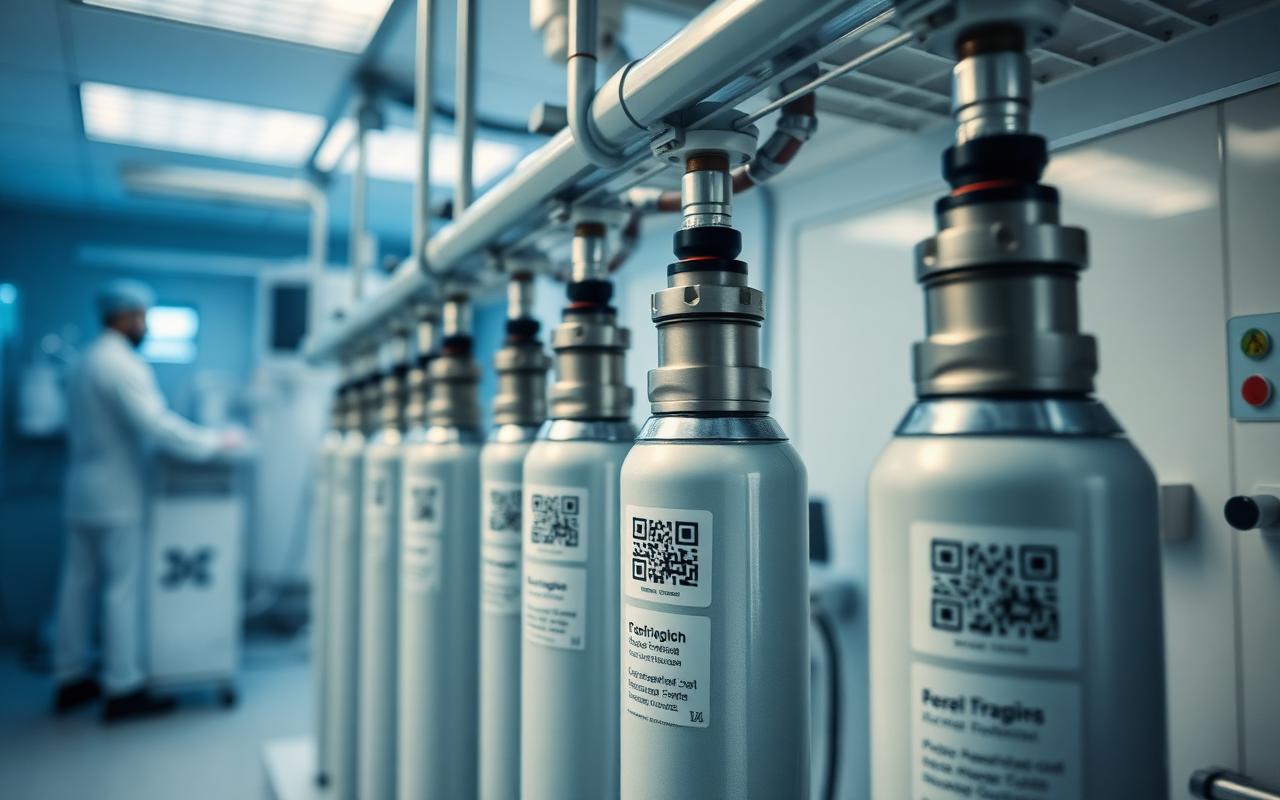
- Storage. Cylinders in the yard need clear, system-visible status: full and ready for dispatch, in quarantine pending a purity retest, or awaiting collection for refill. Mixing these categories physically without clear digital status flags is one of the most common causes of a wrong cylinder reaching a hospital.
- Dispatch. Cylinders assigned to a specific hospital or health facility need delivery documentation that captures the exact serial numbers loaded onto the vehicle, not just a total count. This becomes essential evidence if a hospital later disputes what was delivered, or if a batch recall needs to be executed quickly.
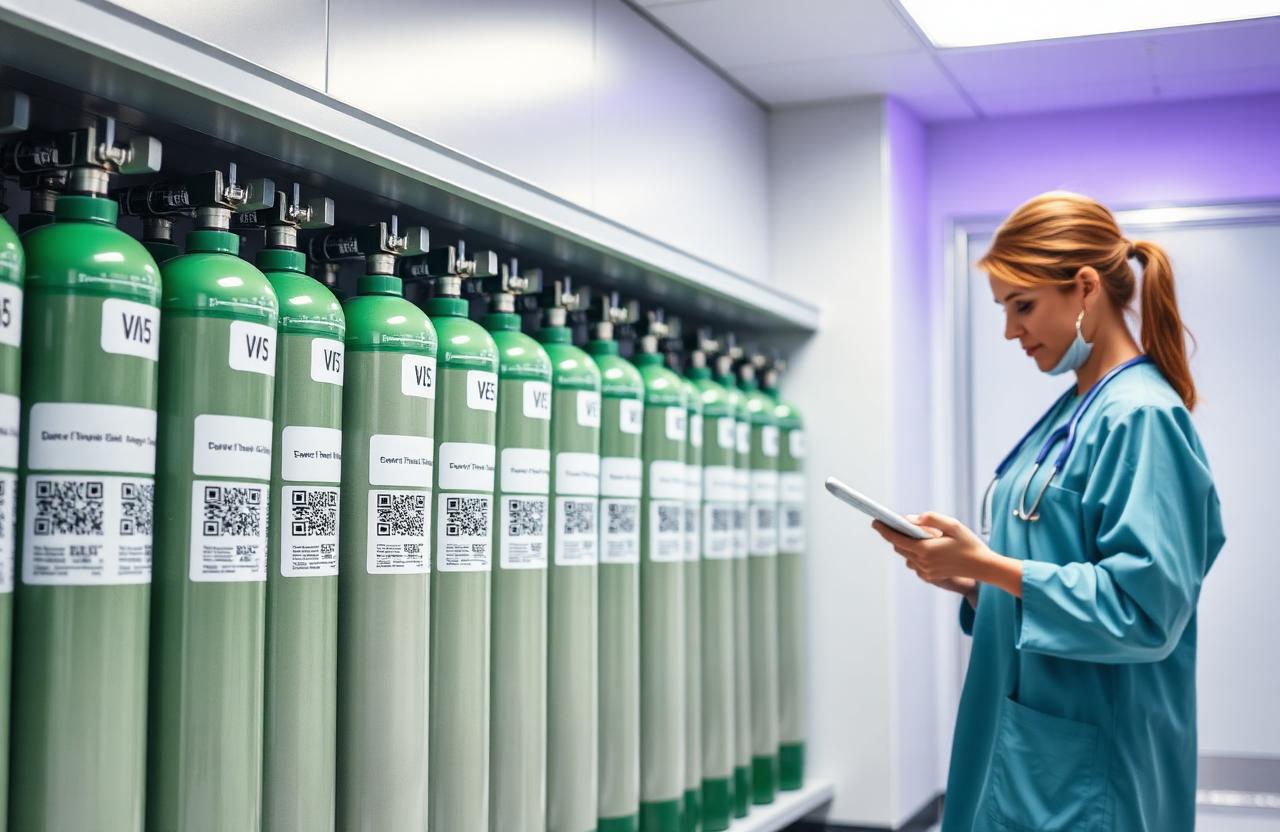
- Bedside handling. Within the hospital, wards should scan cylinders in and out as they move from central stores to patient bays, which lets clinical and biomedical engineering staff know instantly which cylinders are in active use, which are empty and awaiting exchange, and which are reserve stock.
- Return and refill. When empty cylinders come back to the supplier, closed-loop reconciliation matches what was dispatched against what has returned, flags any cylinders still outstanding past their expected turnaround, and feeds directly into the next fill cycle's batch records.
Every one of these five stages needs to write to the same underlying record for a given cylinder. If dispatch data lives in one spreadsheet, ward-level scanning lives in a hospital's separate internal system, and fill records live in a plant logbook, you do not have a traceability chain — you have five disconnected fragments that require manual reconciliation to reconstruct even a basic history.
Why QR technology suits medical gas particularly well
Several identification technologies can anchor a traceability system, but QR codes have become the practical default for medical oxygen for reasons specific to the healthcare environment. A durable QR label affixed to the cylinder body gives every unit a scannable digital passport containing its fill batch, purity test result, hydro-test and inspection dates, and current status — all retrievable instantly with any smartphone camera, without requiring a hospital to invest in specialised scanning hardware that most wards simply do not have and cannot justify buying for occasional use.
This matters enormously in practice. A nurse or ward attendant checking a cylinder at 2am does not have a barcode laser scanner on hand, but does have a phone, and a QR-based system means the same identification infrastructure works seamlessly for the supplier's warehouse staff using dedicated scanners and the hospital's clinical staff using consumer devices. Our broader comparison of barcode versus QR labelling goes into more depth on the trade-offs, but for medical gas specifically, the accessibility of QR scanning tips the balance decisively.
RFID technology offers advantages too, particularly for bulk scanning of many cylinders simultaneously in a busy central store without needing line-of-sight to each individual code, and many mature medical gas operators now run a hybrid approach — RFID for rapid bulk stock-taking in central storage, QR for individual bedside verification and patient-facing transparency.
Compliance and regulatory alignment
Medical gas is subject to pharmaceutical-grade quality standards in most jurisdictions, treating oxygen effectively as a drug product with its own good manufacturing practice requirements. This means fill records, batch testing results, and cylinder movement history often need to be retained and be auditable for extended periods, and regulators or accreditation bodies conducting hospital inspections increasingly ask to see evidence of chain-of-custody documentation for the medical gas actually in use on wards, not just supplier-side paperwork.
A traceability platform built for this environment should support automated compliance workflows through a dedicated Cylinder Compliance module — generating hydro-test and inspection due-date alerts well ahead of expiry, blocking a cylinder from being dispatched if its test status has lapsed, and maintaining an exportable audit trail that satisfies both internal quality teams and external inspectors without staff having to manually assemble records from multiple sources under time pressure.
| Paper/manual tracking | Digital QR/RFID-based traceability | |
|---|---|---|
| --- | --- | --- |
| Batch-to-cylinder linkage | Reconstructed manually from logbooks | Instant, automatic at point of fill |
| Recall response time | Days, with uncertain completeness | Hours, with a verified cylinder list |
| Ward-level visibility | Little to none | Real-time scan-in/scan-out |
| Hydro-test compliance tracking | Manual calendar reminders, error-prone | Automated alerts, dispatch blocking |
| Audit readiness | Time-consuming document assembly | Exportable trail on demand |
| Hardware needed at hospital | Specialised, often unavailable | Any smartphone camera |
Emergency readiness and demand surge management
Beyond routine compliance, traceability infrastructure is what makes a supplier resilient during a demand surge — a seasonal respiratory illness spike, an industrial accident requiring mass casualty response, or a public health emergency. Real-time stock visibility across the full fleet, combined with cylinder-level location data, lets a supplier's operations team answer the question "how many full cylinders can we get to Hospital X within four hours" with confidence rather than guesswork, and lets hospital procurement teams plan ahead rather than placing panic orders that strain the wider supply chain.
This is where the integration between a supplier's gas cylinder tracking platform and a hospital's internal cylinder management becomes genuinely valuable rather than a nice-to-have. A shared, real-time view — often delivered through a Customer Portal — means a hospital does not need to phone the supplier to check on an order status or confirm how many cylinders are currently on site; the information is already visible to both parties.
Building it in practice: an implementation roadmap
Moving from a fragmented paper-and-spreadsheet process to a full traceability chain is best approached in phases rather than attempted as a single big-bang rollout, particularly in a live healthcare environment where disruption carries real risk.
- Tag the fleet. Every cylinder needs a durable, chemical-resistant identification label applied at the plant, with the serial number captured into the system before the cylinder ever leaves for its first fill cycle.
- Digitise the fill record. Replace paper fill logs with a scan-based capture step at the filling station that automatically links batch, purity result, and fill date to the cylinder's digital record.
- Integrate dispatch documentation. Delivery notes should be generated from the system with individual serial numbers listed, not typed manually, eliminating a common source of transcription error.
- Pilot ward-level scanning at one or two facilities. Choose willing pilot hospitals, train ward staff on a simple scan-in/scan-out routine using their own phones, and gather feedback before wider rollout.
- Close the loop with return reconciliation. Ensure returned empty cylinders are scanned against the original dispatch record so outstanding cylinders are flagged automatically rather than discovered during an annual audit.
- Layer on compliance automation. Once movement data is flowing reliably, activate hydro-test and inspection alerting so the compliance side of the system runs itself rather than depending on someone remembering a spreadsheet.
- Extend to analytics and demand forecasting. With a full history of fill, dispatch, and consumption data, a supplier can start forecasting hospital-specific demand patterns and pre-position stock ahead of predictable surges, such as seasonal respiratory illness peaks.
Each phase should be validated with the actual clinical and operational staff who will use it daily, because a traceability system that is technically excellent but too cumbersome for a busy ward to use consistently will simply be worked around, recreating the very gaps it was meant to close.
The supplier's internal operations also need to change
Traceability is often discussed from the hospital-facing side, but internal plant and yard operations need equal attention. A Cylinder ERP that ties financial, inventory, and compliance data together ensures that a purity failure or a hydro-test lapse automatically blocks the affected cylinders from appearing as available stock, rather than relying on a warehouse supervisor to remember to physically segregate them. Dispatch planning tools within a broader Cylinder Dispatch Software platform can also prioritise which specific cylinders — by fill date and remaining shelf considerations — go out first, supporting a first-in-first-out discipline that matters for gas quality as well as regulatory record-keeping.
Common gaps that undermine oxygen traceability
Even suppliers who believe they have strong traceability often carry hidden weaknesses that only surface during an incident or audit.
- Labels that degrade faster than the cylinder's service life, becoming unscannable well before the next hydro-test cycle and forcing staff to fall back on manual identification.
- Batch data recorded on paper at the filling station even when the rest of the operation has digitised, creating a single fragile link in an otherwise strong chain.
- No integration between hospital-side scanning and supplier records, meaning ward-level visibility exists but never flows back to inform supplier-side planning or compliance evidence.
- Overreliance on a single identification technology without a fallback — if a QR label is damaged and there is no backup serial number engraved or stamped on the cylinder, the traceability chain breaks entirely for that unit.
- Delayed status updates for cylinders in quarantine, where a purity or pressure test failure is recorded on paper but not immediately reflected in the digital system, leaving a window where the cylinder could theoretically still be dispatched.
Frequently asked questions
Do all cylinders need individual QR codes, or is a batch-level label enough? Individual cylinder identification is essential for medical oxygen. Batch-level labelling alone cannot tell you which specific cylinders reached which patients, which defeats the core purpose of traceability during a recall or quality investigation.
How often should hydro-testing and inspection alerts be reviewed? Alerts should be continuous and automated rather than reviewed on a fixed schedule, with the system proactively flagging cylinders approaching their due date well in advance so they can be pulled from circulation for testing before they lapse, rather than being discovered as non-compliant when a hospital tries to use one.
Can a hospital track cylinders without installing new hardware? Yes. A QR-based system is specifically designed so hospital staff can scan with any existing smartphone camera, avoiding the cost and training burden of deploying dedicated scanning hardware across every ward.
What happens if a purity test fails after cylinders have already shipped? This is exactly the scenario traceability is built to handle. With batch-to-cylinder linkage in place, the supplier can immediately generate a list of every affected cylinder's current location and status, and coordinate a targeted recall rather than a blanket, disruptive stock withdrawal.
Is RFID better than QR for medical oxygen? Neither is universally better; they solve different problems. RFID excels at rapid bulk scanning of many cylinders in central storage without needing to handle each one individually, while QR excels at low-cost, hospital-accessible individual verification. Many mature operations use both.
Where traceability is heading next
As IoT-enabled smart cylinder caps and pressure sensors become more affordable, the next evolution in medical gas traceability is moving from discrete scan events toward continuous, automatic status updates — a cylinder that reports its own pressure and location without needing anyone to scan it at all. Suppliers building their traceability foundation today on solid identification, integrated fill and dispatch records, and compliance automation will be well positioned to layer these IoT capabilities on top when they mature, rather than needing to rebuild their entire tracking approach from scratch.
If your current oxygen distribution process still relies on disconnected paper logs, spreadsheets, and phone calls to reconstruct a cylinder's history, it is worth mapping your existing chain against the five stages outlined above to identify exactly where the gaps sit. Explore how our Medical Gas industry solution and QR Code technology work together to close those gaps, book a demo to see a working traceability chain in action, or contact us to discuss the specific compliance requirements in your region.
Training staff across the traceability chain
Technology alone does not guarantee traceability if the people operating it are not trained consistently. Filling station operators need to understand why the batch-linkage scan step cannot be skipped even under production pressure, warehouse staff need to know how to segregate quarantined cylinders physically as well as digitally, delivery drivers need confidence in confirming serial numbers rather than just total counts, and hospital ward staff need a scan-in/scan-out routine simple enough to follow reliably during a busy shift. Refresher training tied to each hydro-test cycle, rather than a one-time onboarding session, keeps this discipline from eroding as staff turn over. Suppliers that invest in this ongoing training alongside their technology rollout consistently see fewer gaps in their traceability records than those who treat the software as a self-sufficient fix.
Explore related GCT software
Put the ideas in this article into practice with the GCT modules and technologies built for it.
Run a smarter cylinder fleet with GCT
GCT gives gas companies barcode, QR & RFID tracking, automated billing, compliance dashboards and a mobile field app — all in one platform.
Running an enterprise gas distribution operation? Explore the Cylinder Tracking Management System at ctmsgas.com for enterprise-grade cylinder ERP deployments.