Medical Gas Cylinder Tracking for Hospitals & Healthcare
In healthcare, a cylinder is not just an asset — it can be a lifeline. Medical gas cylinder tracking exists to guarantee that the right gas is always available, always safe, and always traceable from the filling plant to the patient's bedside. When a ventilator, an anaesthesia machine or a neonatal incubator depends on a continuous supply of oxygen, nitrous oxide or medical air, there is no room for a cylinder to go missing, expire quietly on a shelf, or be swapped with the wrong gas by mistake. This is why hospitals, gas houses and regulators around the world are converging on digital tracking as the baseline standard of care rather than a nice-to-have upgrade.
The stakes in medical gas logistics are simply higher than in most other industrial cylinder use cases. A missing cylinder of industrial nitrogen might delay a factory shift. A missing cylinder of medical oxygen during a respiratory crisis can cost a life. That asymmetry is what drives hospitals and their gas suppliers to invest in systems that remove ambiguity from the supply chain, replacing manual registers and verbal handoffs with a continuously updated digital record of every cylinder's location, condition, and history.
Why medical gas logistics is fundamentally different
Unlike industrial gases, medical gases are manufactured, filled, and distributed under pharmaceutical-grade regulatory frameworks. Regulatory bodies require manufacturers and hospitals to demonstrate full batch traceability, purity certification, and expiry control for every cylinder that enters a clinical environment. This is not a paperwork formality — it is a legal and clinical obligation that protects patients from contamination, cross-connection, and administration of gas that has degraded or exceeded its certified shelf life.
A few characteristics set medical gas apart from every other cylinder-tracking use case:
- Availability is non-negotiable. A stockout of medical oxygen in an ICU or operating theatre is a patient-safety emergency, not an inconvenience.
- Traceability is a compliance requirement. Suppliers must be able to prove, on demand, which cylinder went to which ward, on which date, filled from which batch.
- Safety margins are extremely thin. Wrong-gas connections, misfilled cylinders, or expired stock reaching a patient can trigger catastrophic outcomes and regulatory action.
- Demand is unpredictable and can spike violently. Respiratory outbreaks, mass-casualty events, and seasonal surges can multiply oxygen consumption within days.
- Multiple custodians handle the same cylinder. A single oxygen cylinder might pass through a filling plant, a distributor's warehouse, a hospital's central store, and finally an individual ward — with different staff responsible at each stage.
Because of this complexity, medical gas tracking cannot rely on the same loose, best-effort record keeping that might suffice for a low-risk industrial gas customer. It requires a rigorous, end-to-end digital chain of custody.
The anatomy of a hospital's cylinder supply chain
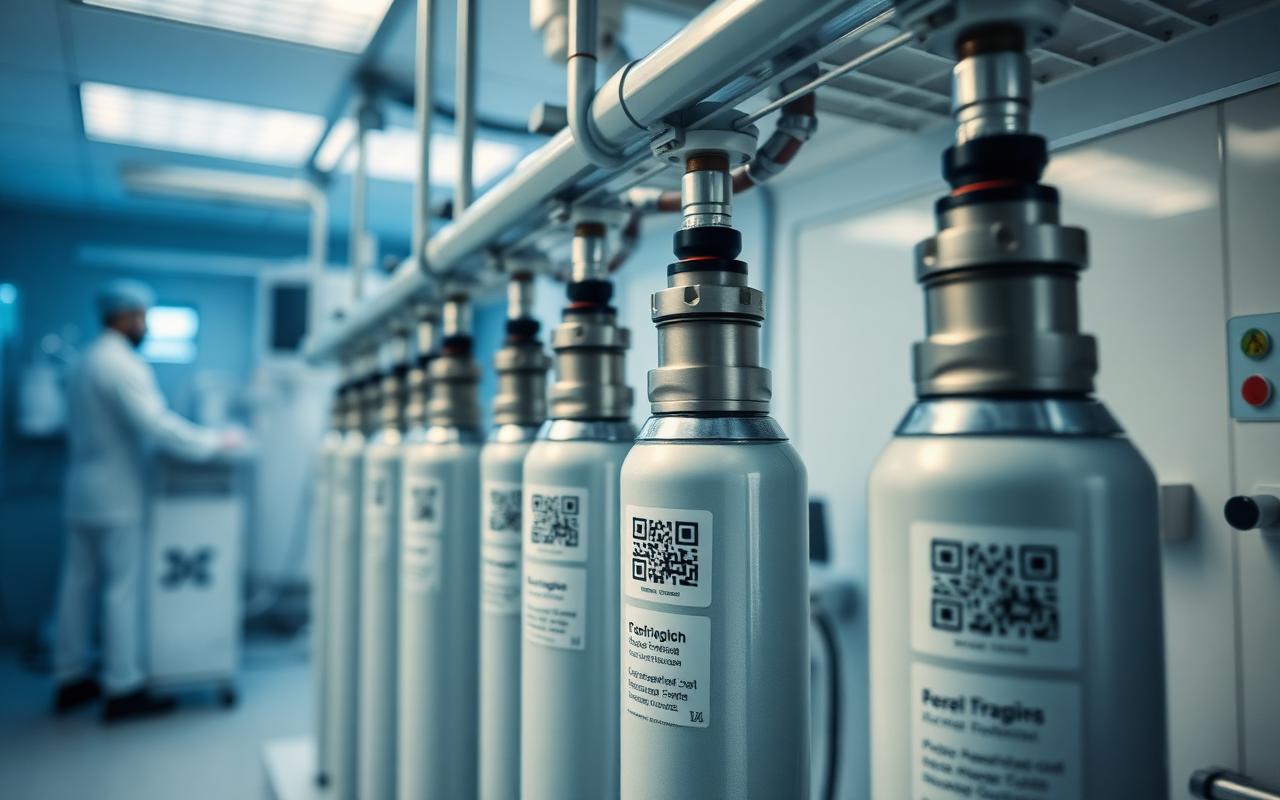
To understand where tracking adds value, it helps to map the journey a medical gas cylinder takes. It typically begins at a certified filling plant, where the cylinder is filled from a specific gas batch, tested for purity, and sealed with a tamper-evident closure. From there it moves to a distributor or the hospital's own bulk store, where it is held in reserve. Ward-level or department-level sub-stores then draw down cylinders as needed, moving them to bedside trolleys, anaesthesia carts, emergency crash carts, or portable transport units used during patient transfers.
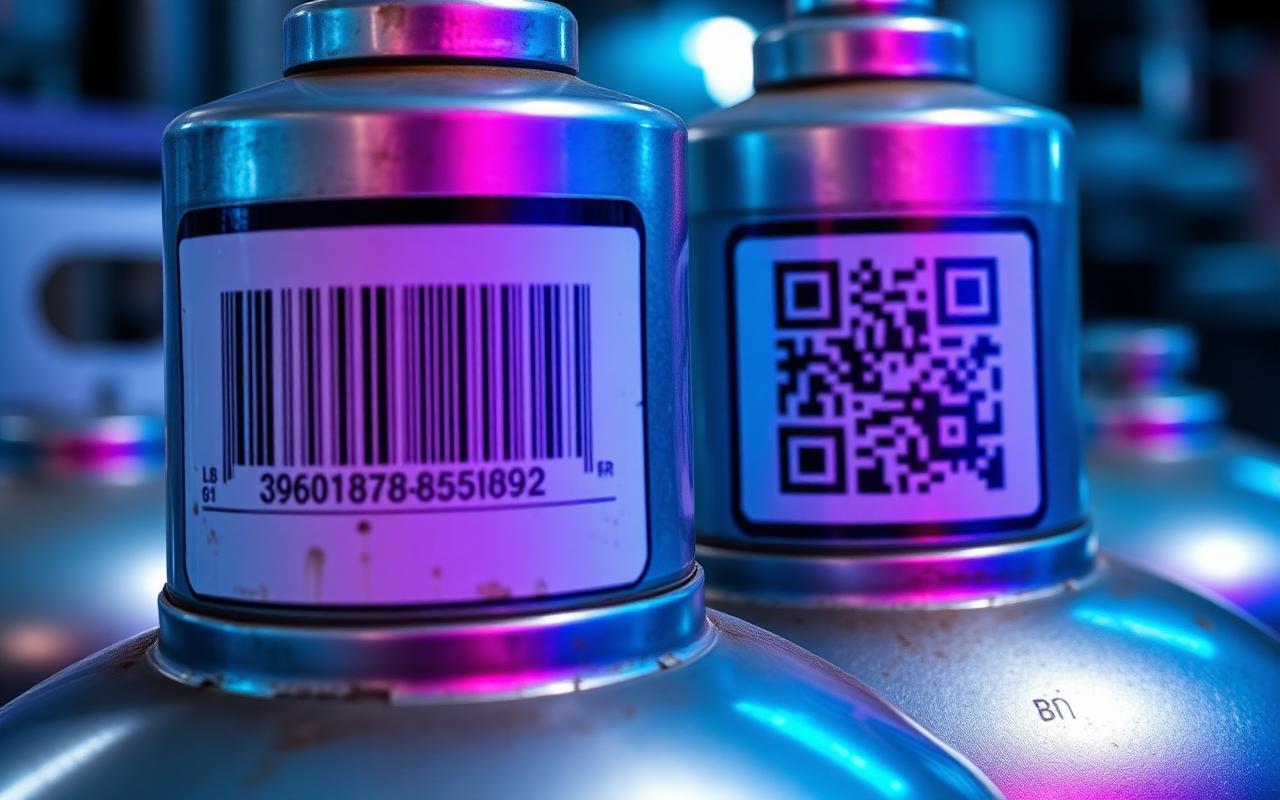
At every one of these handoffs, something can go wrong without tracking: a cylinder can be misplaced in a corridor, a nurse can pick up a nearly empty cylinder thinking it is full, an expired cylinder can slip past a rushed visual check, or a supplier can lose track of how many cylinders are actually on the hospital's premises versus how many have been invoiced. Digital tracking closes every one of these gaps by turning each handoff into a recorded event tied to a unique cylinder identity, typically captured through a barcode, QR code, or RFID tag.
What tracking delivers in a healthcare setting
- Real-time visibility of every cylinder across wards, central stores, transport vehicles and the supplier's own network, so nobody has to physically walk the corridors to know what is available.
- Batch and expiry tracking that flags or blocks the use of any cylinder that has exceeded its certified life, preventing an expired unit from ever reaching a patient.
- Automated par-level alerts that trigger replenishment requests before ward stock drops below a safe threshold, removing the reliance on someone remembering to reorder.
- Full chain-of-custody records that trace a cylinder from the filling plant through every intermediate custodian to the point of clinical use and back again for refilling.
- Rapid recall capability, so that if a particular batch is found to be defective, the hospital can instantly identify every cylinder from that batch currently in use and pull it from circulation.
- Usage analytics by ward and department, giving hospital procurement teams accurate consumption data instead of rough estimates, which sharpens budgeting and contract negotiations with suppliers.
During peak demand events, hospitals with digital cylinder tracking were able to redistribute oxygen intelligently across wards instead of guessing where stock was sitting idle while another department ran critically low.
This redistribution capability turned out to be one of the most consequential benefits observed during periods of extreme respiratory-illness demand. Facilities without visibility into ward-level stock often over-ordered out of caution, creating artificial scarcity elsewhere, while facilities with live dashboards could see exactly which wards had surplus and which needed urgent top-up, moving cylinders internally rather than waiting on external supply.
Safety mechanisms that only digital tracking can provide
Beyond simple visibility, a well-implemented tracking system introduces active safety checks that manual processes cannot reliably replicate at scale.
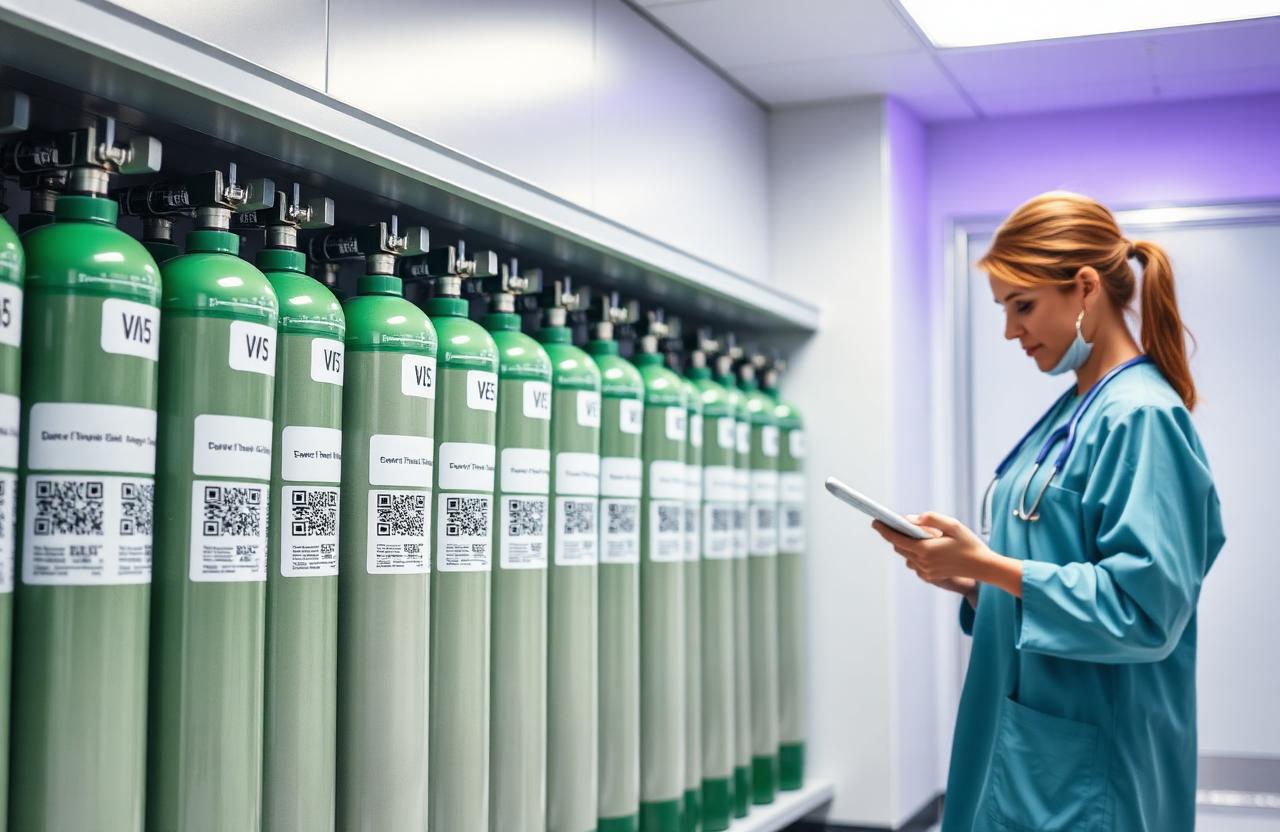
- Gas-type verification at point of use. Scanning a cylinder before connecting it to a patient device can trigger an alert if the gas type does not match what the device or care plan requires, catching human error before it becomes harm.
- Pressure and fill-level cross-checks. Where cylinders are paired with smart regulators or IoT sensors, the system can flag a cylinder reported as "full" that is showing an unexpectedly low pressure reading.
- Maintenance and testing status. Cylinders due for hydrostatic testing or valve servicing can be automatically flagged and removed from the clinical pool until they pass inspection.
- Tamper and seal verification. Digital records of seal integrity checks at receipt help hospitals reject compromised cylinders before they enter the clinical supply chain.
These mechanisms matter because clinical staff are frequently working under time pressure, and a system that surfaces a warning automatically is far more reliable than expecting a nurse or technician to remember every check during an emergency.
The supplier's perspective: winning and keeping hospital contracts
Medical gas suppliers operate in a market where trust and compliance are the primary currency. Hospitals increasingly demand documentary proof of traceability as part of their vendor qualification process, and suppliers who cannot produce it risk losing contracts to competitors who can. Digital tracking gives suppliers several competitive advantages.
Suppliers using QR-based or RFID-based tracking combined with a customer portal can give hospitals self-service visibility into their own cylinder holdings, deposit balances, delivery history and outstanding returns. This transparency dramatically reduces the volume of billing disputes and reconciliation calls that would otherwise consume staff time on both sides. It also builds a level of trust that makes contract renewal conversations far simpler, because the hospital's procurement team already has the data they need without having to request it.
Suppliers also benefit internally. A cylinder rental software platform automatically tracks which cylinders are with which hospital, for how long, and whether demurrage or rental charges apply, closing a revenue leak that is common in manual billing environments. Combined with cylinder dispatch software, suppliers can plan delivery routes based on actual hospital consumption patterns rather than fixed schedules, ensuring that high-demand facilities never run short while low-demand facilities are not over-stocked with cylinders that tie up capital.
Comparing manual and digital approaches
| Capability | Manual register / spreadsheet | Digital cylinder tracking |
|---|---|---|
| --- | --- | --- |
| Real-time ward-level visibility | Not available; relies on physical checks | Live dashboard updated on every scan |
| Batch and expiry enforcement | Manual visual inspection, error-prone | Automated flags and system-level blocks |
| Recall response time | Days, requires manual cross-referencing | Minutes, instant batch-level query |
| Chain-of-custody proof for audits | Fragmented paper trail | Single digital record per cylinder |
| Reordering trigger | Reactive, based on staff memory | Automated par-level alerts |
| Billing and deposit reconciliation | Manual, dispute-prone | Automated, portal-based transparency |
| Cross-ward redistribution during shortages | Ad hoc, based on informal knowledge | Data-driven, system-suggested |
Regulatory and accreditation pressure
Healthcare accreditation bodies and drug regulators in many jurisdictions now expect hospitals to demonstrate documented control over medical gas cylinders as part of quality and safety audits. Inspectors increasingly ask not just "do you have a process" but "can you show me the record for this specific cylinder, right now." Hospitals relying on paper logs often struggle to produce this on demand, whereas a digital system built around cylinder tracking management principles can generate the required report in seconds. This capability alone has become a decisive factor in accreditation renewals for many facilities.
Compliance extends beyond the hospital walls too. Suppliers operating under cylinder compliance frameworks must retain evidence of testing cycles, fill records and batch certificates for years, and be able to produce them instantly if a quality issue is ever traced back to a specific fill date. Digital tracking turns this from an archival nightmare into a searchable database.
Implementation: a practical path for hospitals and suppliers
- Assign a unique digital identity to every cylinder. Whether via barcode, QR tracking or RFID, this is the foundational step that everything else depends on.
- Map every custody point in your facility. Identify where cylinders change hands — receiving dock, central store, ward sub-store, bedside — and place a scan checkpoint at each one.
- Integrate batch and expiry data at the point of fill. Ensure the supplier's fill records flow into the same system the hospital uses, so expiry enforcement works end-to-end rather than in isolated silos.
- Set par levels per ward based on historical consumption. Use actual usage data rather than rough estimates to avoid both stockouts and overstocking.
- Train clinical and logistics staff on a simple mobile scanning workflow. A driver mobile app or ward-level scanning app should require minimal taps so it fits into already-busy clinical routines.
- Enable the supplier-facing customer portal. Give the hospital's procurement team direct access to deposit balances and delivery history to reduce administrative back-and-forth.
- Run a recall drill. Simulate a batch recall to confirm the system can identify every affected cylinder in the facility within minutes, not days.
- Review analytics monthly. Use consumption trends to refine par levels, negotiate supply contracts, and anticipate seasonal demand spikes before they become emergencies.
Building resilience beyond day-to-day operations
The ultimate goal of medical gas tracking is a supply chain that never surprises anyone — not the ward nurse reaching for a cylinder, not the procurement officer reviewing invoices, and not the hospital administrator facing an accreditation audit. Resilience means the system keeps working even when demand spikes unpredictably, when a batch needs to be recalled overnight, or when a new ward opens and needs its own par levels established from scratch.
Hospitals that have made this shift report fewer emergency reorders, faster audit responses, and measurably fewer near-miss incidents related to gas mix-ups or expired stock. Suppliers report shorter billing cycles, fewer disputes, and stronger long-term contracts because hospitals trust a partner who can prove exactly where every cylinder is at any moment.
Medical gas has always demanded a higher standard of accountability than industrial gas, and increasingly the tools exist to meet that standard without adding administrative burden to already-stretched clinical staff. With GCT, medical gas providers and hospital pharmacy or facilities teams achieve close to full traceability of critical gases, giving clinical staff confidence that supply is under control even during the most demanding periods.
Frequently asked questions
Does digital tracking replace the need for manual safety checks at the bedside? No. It complements clinical checks by giving staff instant confirmation of gas type, batch and expiry status, reducing the chance that a manual check is skipped under time pressure.
Can a hospital track cylinders supplied by more than one vendor in the same system? Yes, provided the tracking platform supports multi-supplier cylinder identities, which most modern systems do through shared barcode or RFID standards.
How quickly can a recall be executed once tracking is in place? With batch data linked to individual cylinder records, hospitals can typically identify every affected unit within minutes rather than the days a manual audit would take.
Is RFID necessary, or is barcode/QR sufficient for a hospital? Barcode or QR is often sufficient for ward-level tracking, while RFID adds value at high-throughput gates such as central stores or loading docks where bulk reads save time.
If your hospital or gas supply business is ready to move from paper registers to full traceability, book a demo to see medical gas workflows in action, or contact us to discuss the right rollout plan for your facility.
Extended perspective: cost, staffing and long-term planning
Hospital finance and facilities teams evaluating a tracking rollout often ask about total cost of ownership rather than just software licensing. In practice, the biggest cost driver is not the platform itself but the initial labelling of the existing cylinder fleet and the training time required to get ward staff comfortable with a new scanning habit. Facilities that budget for a dedicated rollout coordinator during the first two to three months see far smoother adoption than those that expect existing staff to absorb the change alongside their normal workload. Staffing plans should also account for a designated super-user on each shift who can answer quick questions from colleagues rather than routing every issue to IT.
Long-term planning matters just as much. A hospital that only tracks cylinders during a single accreditation cycle and then lets scanning discipline lapse will find itself back at square one within a year. Building tracking into standard operating procedures — so that scanning a cylinder is simply part of receiving, transferring or using it, rather than an optional extra step — is what separates hospitals with lasting traceability from those that briefly achieved it during an audit period and then quietly reverted to old habits. Facilities teams should schedule a light-touch quarterly review of scan compliance rates by ward, treating dips as an early warning sign rather than waiting for the next accreditation visit to discover a problem.
Suppliers, too, benefit from thinking beyond the initial contract. A supplier who continues to refine par levels, review consumption analytics with the hospital's procurement team, and proactively flag unusual usage patterns builds a relationship that is far stickier than one based purely on price, and this ongoing engagement is often what separates a single-year contract from a multi-year partnership renewed without a competitive tender.
Explore related GCT software
Put the ideas in this article into practice with the GCT modules and technologies built for it.
Run a smarter cylinder fleet with GCT
GCT gives gas companies barcode, QR & RFID tracking, automated billing, compliance dashboards and a mobile field app — all in one platform.
Running an enterprise gas distribution operation? Explore the Cylinder Tracking Management System at ctmsgas.com for enterprise-grade cylinder ERP deployments.