
Gas Cylinder Safety Regulations in India: A PESO Overview
Running a gas business in India means operating inside one of the more mature, well-codified safety frameworks in the industrial world — and also one that carries real consequences for getting it wrong. This overview explains the key regulatory pieces in plain, practical language for operators, distributors and fleet managers. It is educational content, not legal advice, so always confirm current requirements directly with the relevant authorities before making compliance decisions.
The regulatory landscape at a glance
India's compressed gas cylinder regime sits at the intersection of explosives law, transport law and, for medical gases, drug regulation. Understanding which authority governs which aspect of your operation is the first step toward building a compliance programme that doesn't leave gaps.
- PESO (Petroleum and Explosives Safety Organisation) — the primary authority for cylinder design approval, manufacturing licensing, filling licensing and periodic testing requirements
- The Gas Cylinders Rules, 2016 (and amendments) — the operative rules governing manufacture, possession, filling, transport and testing of cylinders
- The Static and Mobile Pressure Vessels (Unfired) Rules — relevant for bulk storage vessels and certain bulk transport tankers that feed cylinder filling operations
- State drug control authorities — for medical gas cylinders, which sit under both PESO's cylinder rules and pharmaceutical regulation given their end use
- Motor Vehicles Act provisions and CMVR — governing the transport of cylinders classified as hazardous cargo
Who regulates what
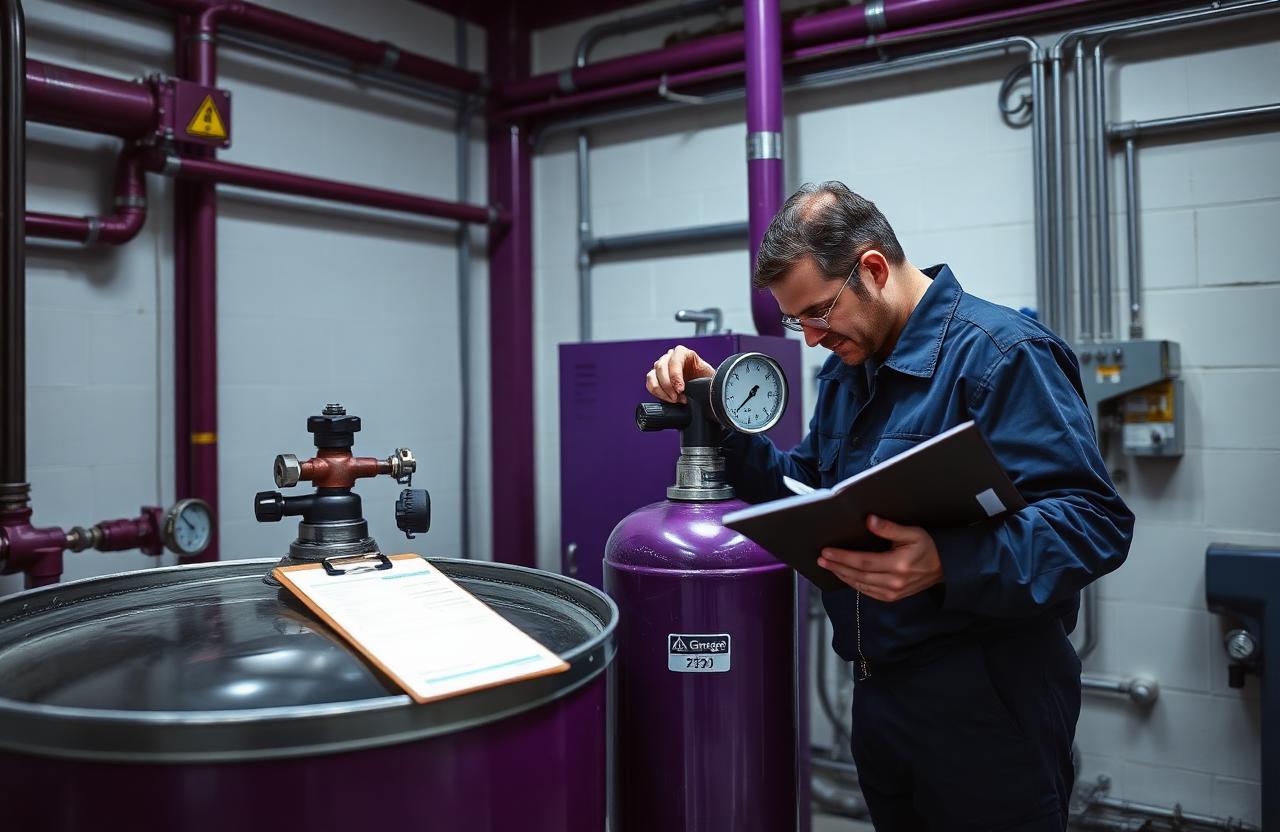
PESO administers the core rules governing compressed-gas cylinders, including licensing of manufacturers and filling stations, approval of cylinder design and material specifications, and setting testing intervals. Any organisation that fills, stores in bulk, or transports cylinders in meaningful volume will, at some point, need a PESO licence or approval tied to that activity.
Beyond PESO, state-level explosives and factories departments often layer additional local requirements on top — particularly around storage licensing for filling depots and warehouses. A compliance programme built only around the national rules while ignoring state-specific storage and handling permits is incomplete.
The Gas Cylinders Rules in practical terms
The Gas Cylinders Rules cover the full lifecycle of a cylinder: who is permitted to manufacture it, what materials and design standards it must meet, who may fill it and under what conditions, how it must be marked, how it must be transported, and at what intervals it must be periodically tested.
For a working gas company, the rules translate into a handful of operational obligations:
- Only fill cylinders that are within their valid test period and bear correct, legible markings
- Maintain records demonstrating the provenance, ownership and test history of every cylinder in circulation
- Ensure filling pressure and product match the cylinder's design specification and colour-coding
- Transport filled cylinders using vehicles, securing methods and documentation that meet the prescribed safety standards
- Store cylinders — both filled and empty — in licensed premises meeting separation, ventilation and fire-safety requirements appropriate to the gas class
Periodic testing and its operational impact
Cylinders must undergo periodic hydrostatic (hydro) testing at intervals defined by gas type and cylinder construction — commonly every five years for many industrial gas cylinders, though intervals vary and should always be confirmed against the current rule text and any gas-specific notifications. Missing a test date does not just create a paperwork problem: it takes the cylinder out of legal service immediately, meaning it cannot be filled, and in practice cannot be transported filled, until it is retested and re-certified.
For a fleet of any meaningful size, tracking thousands of individual test-due dates by hand is where compliance most commonly breaks down. It only takes one lapsed cylinder finding its way into circulation to expose an organisation to regulatory action, and in a worse case, to a safety incident. This is precisely the kind of structured, high-volume, date-driven tracking problem that a dedicated Cylinder Compliance solution and Cylinder Testing & Hydro Test module are built to solve — flagging cylinders approaching their due date well in advance, and hard-blocking dispatch of cylinders that have already lapsed.
Marking, colour coding and traceability
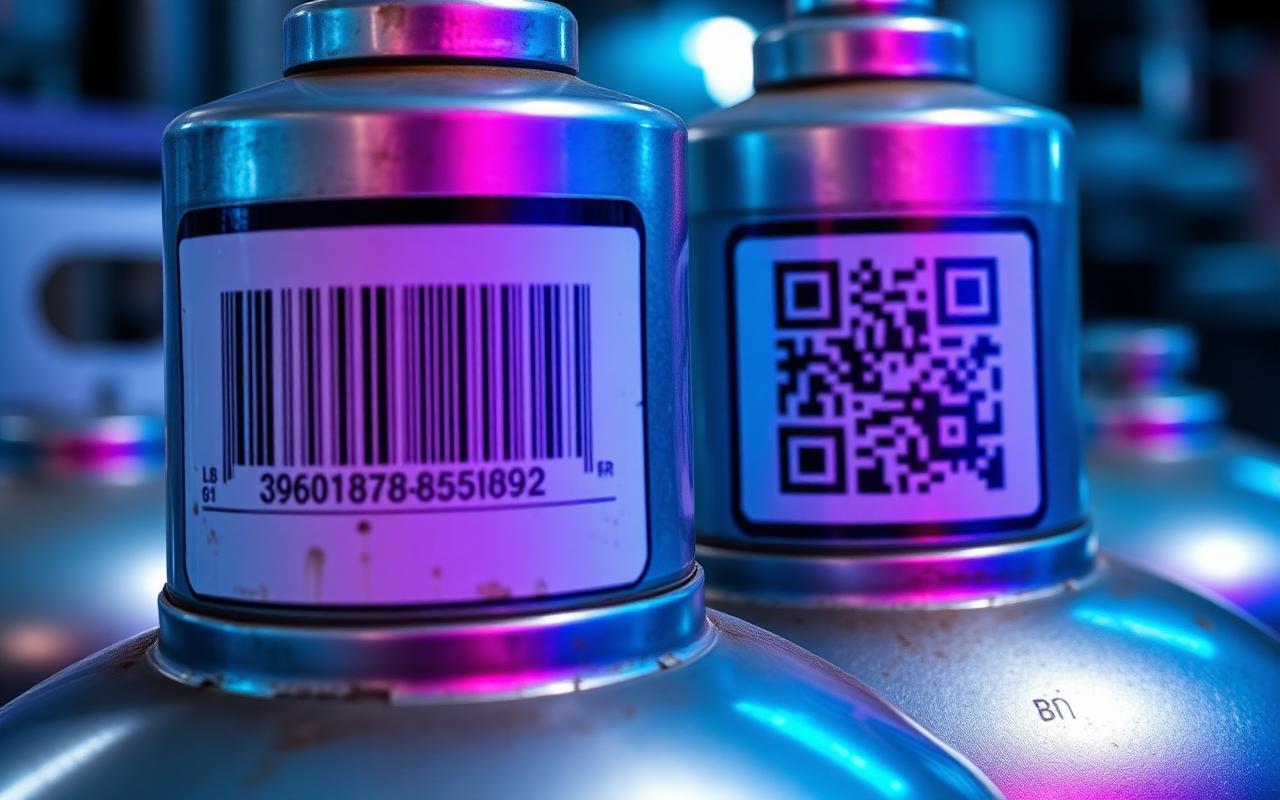
Every cylinder in circulation must carry a defined set of markings: manufacturer identification, original test date, periodic test dates, working pressure, and ownership marking, among others, along with gas-specific colour coding that allows quick visual identification. These markings are the backbone of manual compliance verification, but they degrade over time — paint fades, stamps wear, and stickers peel.
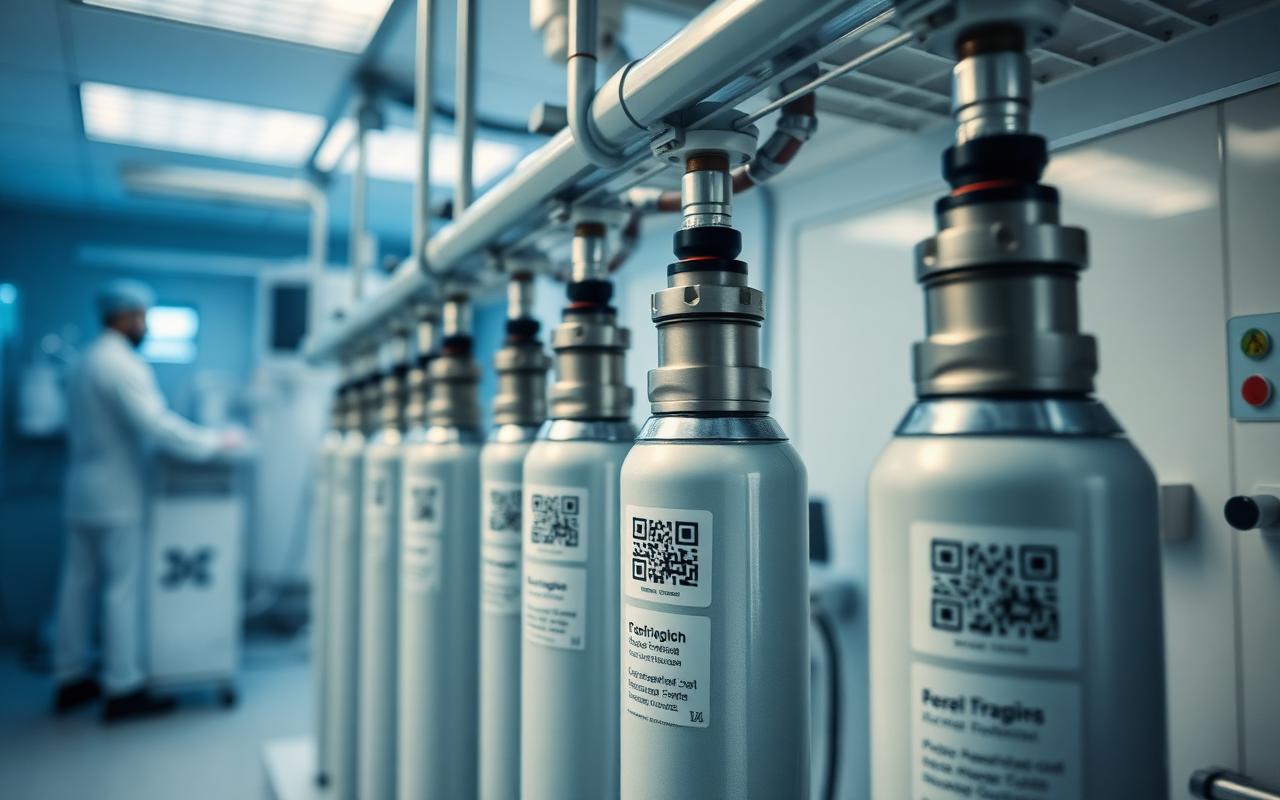
A digital identity layered on top of the physical markings — via a barcode, QR code or RFID tag — solves this degradation problem directly. Instead of relying on a technician reading a partially worn stamp under poor warehouse lighting, a scan instantly retrieves the authoritative digital record: exact test date, cylinder owner, gas type history, and any flags or holds against that specific serial number. This does not replace the physical marking requirement, but it makes verification dramatically faster and more reliable at every handoff point.
Transport compliance
Transporting filled cylinders, particularly in bulk on delivery vehicles, brings in additional requirements around vehicle placarding, securing (cylinders must be restrained upright or in appropriate racking depending on gas type), separation of incompatible gases, and carriage of correct transport documentation. Drivers should be equipped to demonstrate, on request, that every cylinder on board is within test date and correctly documented — something a driver mobile app with offline-capable digital manifests handles far more reliably than a paper delivery challan that can be misplaced or fall out of date between loading and delivery.
Medical gas cylinders: an additional layer
Medical gas cylinders carry the same PESO cylinder obligations as industrial gases, plus additional pharmaceutical-grade quality and traceability expectations given their direct patient-safety implications. Hospitals and medical gas suppliers are increasingly expected to demonstrate batch traceability — which cylinder, filled from which batch, delivered to which ward, on which date — a requirement that intersects closely with the broader Healthcare and Medical Gas compliance landscape. A tracking platform that ties cylinder-level scans to fill batch records gives medical gas suppliers a defensible audit trail if a quality question ever arises.
Comparing manual versus digital compliance management
| Compliance activity | Manual process | Digital tracking platform |
|---|---|---|
| --- | --- | --- |
| Tracking test-due dates | Spreadsheet or paper register, easily out of date | Automated alerts before due date, hard blocks on dispatch after |
| Verifying markings at dispatch | Visual inspection, dependent on legibility | Scan-based lookup of authoritative digital record |
| Producing an inspection-ready audit trail | Manual compilation across multiple registers | One-click report per cylinder or batch |
| Managing state-specific storage licences | Filed separately, easy to lose track of renewal dates | Centralised compliance calendar with renewal alerts |
| Cross-referencing customer complaints to fill batches | Time-consuming manual search | Instant lookup via cylinder history |
Building an internal compliance calendar
Regardless of whether you run a manual or digital system, every gas operator should maintain a compliance calendar covering:
- Filling licence renewal dates for each facility
- Storage licence renewal dates for each licensed premises
- The rolling test-due schedule for the entire active fleet, segmented by gas type and cylinder class
- Internal audit dates to spot-check marking legibility and documentation accuracy
- Driver and staff certification renewal dates where applicable
Practical steps to strengthen your compliance posture
- Conduct a baseline review of every cylinder in your active fleet against current test-due status, and quarantine anything found to be lapsed
- Digitise cylinder identity using barcode, QR or RFID so test dates and ownership data travel with the asset rather than living solely on paper or fading paint
- Set automated alerts at multiple thresholds ahead of test-due dates — for instance sixty, thirty and seven days out — so recall-for-testing scheduling can happen without last-minute scrambling
- Train drivers and dispatch staff to treat a lapsed-cylinder alert as a hard stop, not a soft warning
- Run periodic internal audits, cross-referencing your Cylinder Inventory Software records against a physical sample, to confirm the digital record matches reality
- Maintain a documented escalation path for any cylinder found non-compliant in the field, including how it is withdrawn from service and routed for retesting
Frequently asked questions
What happens if a cylinder is filled after its test date has lapsed? It is a compliance violation with potential safety implications, and the filling entity bears responsibility. A well-configured tracking system prevents this by blocking the fill or dispatch transaction automatically when a cylinder's test status has lapsed.
How often must cylinders be hydro tested? Intervals vary by gas type and cylinder construction and are set out in the current Gas Cylinders Rules and associated notifications; always confirm the specific interval applicable to your cylinder class with PESO or your testing authority rather than relying on a general rule of thumb.
Do medical gas cylinders require anything beyond standard PESO compliance? Yes — medical gas supply typically also falls under pharmaceutical quality and traceability expectations from state drug control authorities, in addition to the standard cylinder rules.
Can digital tracking replace physical markings on cylinders? No. Physical markings remain a regulatory requirement. Digital tracking is a complementary layer that makes verification faster and more reliable, and provides a durable record even if physical markings degrade.
Is a spreadsheet register acceptable for managing test-due dates? It can work for very small fleets, but it scales poorly and carries a high risk of a lapsed cylinder slipping through undetected as fleet size and location count grow — which is exactly the failure mode a dedicated compliance module is designed to prevent.
Turning compliance into a competitive advantage
The organisations that treat regulatory compliance purely as a defensive, checkbox exercise tend to under-invest in it until an inspection or incident forces the issue. The organisations that get real value from it treat compliance data as an operational asset: a fleet where every cylinder's test status, ownership and history is instantly retrievable is not just safer and more defensible in an audit, it is also faster to operate, because dispatch, billing and customer service teams are never blocked waiting on a paper trail search.
If your current compliance process still depends on paper registers and manual date-tracking, the fastest way to close the gap is to digitise cylinder identity and test history now, rather than waiting for an inspection to expose it. Continue with our companion piece on the hydro test compliance guide, explore how Cylinder Compliance and Cylinder Testing work together inside GCT, or book a demo to see how automated compliance alerts fit your specific cylinder fleet and regulatory footprint.
Explore related GCT software
Put the ideas in this article into practice with the GCT modules and technologies built for it.
Run a smarter cylinder fleet with GCT
GCT gives gas companies barcode, QR & RFID tracking, automated billing, compliance dashboards and a mobile field app — all in one platform.
Running an enterprise gas distribution operation? Explore the Cylinder Tracking Management System at ctmsgas.com for enterprise-grade cylinder ERP deployments.